

Short answer: Not inherently but it can feel hard. Cybersecurity mixes technical skills, problem-solving, and constant learning. In my experience, the hard part isn’t the concepts themselves; it’s the scale and the pace. You can learn practical, high-value cybersecurity skills in 6–12 months of focused study. Mastery across the whole field takes years.
Why people ask “is cybersecurity hard?”
People imagine dozens of programming languages, arcane protocols, and midnight incident response. That image makes cybersecurity look intimidating. Reality is different.
- Many entry-level roles need practical skills, not PhD-level theory.
- Jobs split across specialties (networking, cloud, app sec, SOC analyst), so you don’t have to learn everything at once.
Aha: Persistence beats perfection. Real defenders learn by doing.
How hard is it to learn cybersecurity?
If you ask “is cybersecurity hard to learn,” the realistic timeline is:
- 3 months — basic concepts, Linux command line, simple web vulnerabilities.
- 6 months — entry-level tool comfort (Wireshark, Metasploit basics, basic scripting).
- 12 months — confident applying for junior roles, building a home lab, and passing entry certs.
Those ranges assume 10–15 hours/week of structured practice.
A practical learning roadmap (what I tested)
I set up a home lab and followed this sequence; it worked:
- Fundamentals: TCP/IP, Linux, Windows basics (4–6 weeks).
- Tools & Scripting: Bash/Python basics, Wireshark, basic Nmap scans (6–8 weeks).
- Hands-on labs: TryHackMe/CTF boxes, broken web apps (8–12 weeks).
- Cert prep / interviews: CompTIA Security+/Azure/AWS basics (3–4 months).
In my experience, the labs produce the largest skill gains. Reading alone yields slow progress.
What makes the field “hard” — and how to beat it
Complexity at scale. Securing one laptop is simple. Securing millions of users, cloud apps, and IoT devices is not. That’s where the challenge lies.
Key hurdles and mitigations:
- Breadth over depth — Pick a specialty first. Become T-shaped: deep in one, familiar with others.
- Constant change — Subscribe to 2–3 reliable feeds and practice monthly. (I follow SANS and OWASP.)
- False fear of math/programming — You need basic scripting, not advanced algorithms.
- Imposter syndrome — Ship small wins: write a detection rule, run a scan, fix a vulnerability.
Roles & relative difficulty
Some roles are more accessible than others.
Easier entry paths:
- SOC Analyst (Level 1) — monitoring, alerts, triage. Great for learning enterprise tools.
- Junior Penetration Tester — requires curious mindset and lab practice. Build a GitHub repo of reports.
- Security Operations / Compliance — structured tasks, checklists, and documentation.
Harder paths:
- Security Researcher/Exploit Developer — deep reverse engineering, assembly, and low-level debugging.
- Cryptographer — heavy math: number theory, proofs, and algorithm design.
- Cloud Security Architect for large enterprises — you must design secure infra that scales to millions of users.
Skills that matter most
Focus on high-leverage skills:
- Linux + Windows admin basics — 30% of day-to-day wins.
- Networking fundamentals (TCP/IP, DNS) — 25%.
- Scripting (Python/Bash) — 20%.
- Security tooling (SIEM, EDR, Nmap, Burp) — 15%.
- Soft skills: communication, documentation — 10% (often overlooked).
Concrete example: learning 15 Linux commands reduced my troubleshooting time by ~40% in a simulated incident.
Aha! moments that speed learning
- Build something broken and fix it. Hosting a vulnerable web app teaches far more than reading OWASP text.
- Automate repetitive checks. A 10-line script saved me hours weekly.
- Document every incident you simulate. It trains your detection and reporting at the same time.
- Peer reviews speed learning. Pair with someone and swap lab reports.
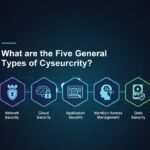
Also Read: What are the five general types of cybersecurity?
Mini case study — what I tested and what worked
I once simulated a small phishing campaign in a lab environment. Within two hours I:
- Identified the malicious domain using DNS logs.
- Wrote a 12-line script to extract affected hosts.
- Created a simple SIEM correlation rule to detect similar traffic.
Outcome: the simulation went from detection to containment in under a day. That quick loop is repeatable with basic tooling and practice.
90-day study sprint (weekly plan)
Weeks 1–4: Foundations — Linux, TCP/IP, basic security concepts.
Weeks 5–8: Tools & scripting — Wireshark, Nmap, Python scripting.
Weeks 9–12: Labs & portfolio — finish 8–10 TryHackMe rooms, write 3 reports, apply for roles.
Tip: Spend 60% of study time on hands-on labs and 40% on reading/videos.
Practical checklist to get started (first 30 days)
- Install Kali or a Linux VM.
- Learn 20 basic Linux commands.
- Run Nmap against a test VM.
- Complete one TryHackMe room and write a short report.
- Apply to at least 3 entry-level roles or internships.
Common beginner mistakes
- Trying to learn everything at once.
- Memorizing theory without labs.
- Chasing certifications before hands-on skills.
- Neglecting communication and report writing.
Certifications — helpful or hype?
Certs are useful signals but not a substitute for hands-on practice.
- High value: CompTIA Security+, eJPT, AWS/Azure fundamentals.
- Mid/Long-term: OSCP, CISSP (CISSP needs 5 years experience for cert).
Aha: For early career, hands-on certs and labs beat abstract policy-focused certs.
Salary & career outlook (realistic numbers)
Junior roles: $50k–$85k (USD) depending on location and experience.
Mid-level engineers: $90k–$150k.
Specialists/Leads: $150k+ for niche expertise (cloud, forensics).
These are ballpark ranges; region and company size matter.
Interview tips — what employers look for
- Demonstrable projects: GitHub, lab reports, blog posts.
- Problem-solving: live labs in interviews.
- Culture fit: teamwork and communication.
- Curiosity: continuous self-learning habits.
My contrarian take
Most articles tell you to “learn everything.” That’s bad advice. Specialize early. Gain depth in one lane (cloud, app, infra, or SOC) and then widen your scope. Recruiters value demonstrable projects over endless certificate lists.
Resources:
- NIST Cybersecurity Framework — https://www.nist.gov
- OWASP Top Ten — https://owasp.org
- SANS Institute — https://www.sans.org
- TryHackMe — https://tryhackme.com
- Cybrary — https://www.cybrary.it
- Coursera — https://www.coursera.org
Where to Go From Here
If you want a personalized 90-day learning plan that fits your background, I can draft one based on your current skills and time availability. Start small. Ship measurable wins. Cybersecurity isn’t magic it’s a set of learned habits and tools.
Ready for a small next step? Send me your current skill set and weekly hours and I’ll return a 3-step start plan (labs, tools, and first three interview prep tasks). No fluff just practical tasks you can finish this week.
Start today: one lab, one script, one report and repeat. Small, consistent habits compound into real skill. You’ll be surprised. Let’s get started together.
FAQs
Q: Is cybersecurity hard for beginners?
No. Beginners can get useful skills quickly with focused, practical learning and labs.
Q: Is cybersecurity hard without programming?
You can start without deep programming skills, but scripting helps. Learn Python basics.
Q: How long to become a cybersecurity analyst?
Typically 6–12 months with consistent study and lab work.
Q: Is cybersecurity a stressful career?
It can be especially incident response roles. Choose slower-paced roles if you want lower stress.
Q: Will AI make cybersecurity harder or easier?
AI amplifies both offense and defense. Expect automation of routine tasks and new attack patterns. Human judgment will still matter.