How an AI Vending Machine Works: A Simple, Smart Retail Guide
An AI vending machine is changing how people buy snacks, drinks, and everyday items across the United States. Instead of buttons or product codes, these machines use artificial intelligence to let customers grab what they want and walk away. This guide explains how AI vending machines work, the technology behind them, and why they are growing so fast.
What Is an AI Vending Machine?
An AI vending machine is a smart, self-service retail system that uses cameras, sensors, and artificial intelligence to automatically detect which items a customer takes and charge them without manual checkout.
In simple terms:
- You open the machine
- Take products
- Close the door
- Payment happens automatically
How Does an AI Vending Machine Work? (Step by Step)
Step 1: Customer Identification
Before access, users are identified using:
- Credit or debit card tap
- Mobile app login
- QR code scan
This links the session to the correct payment method.
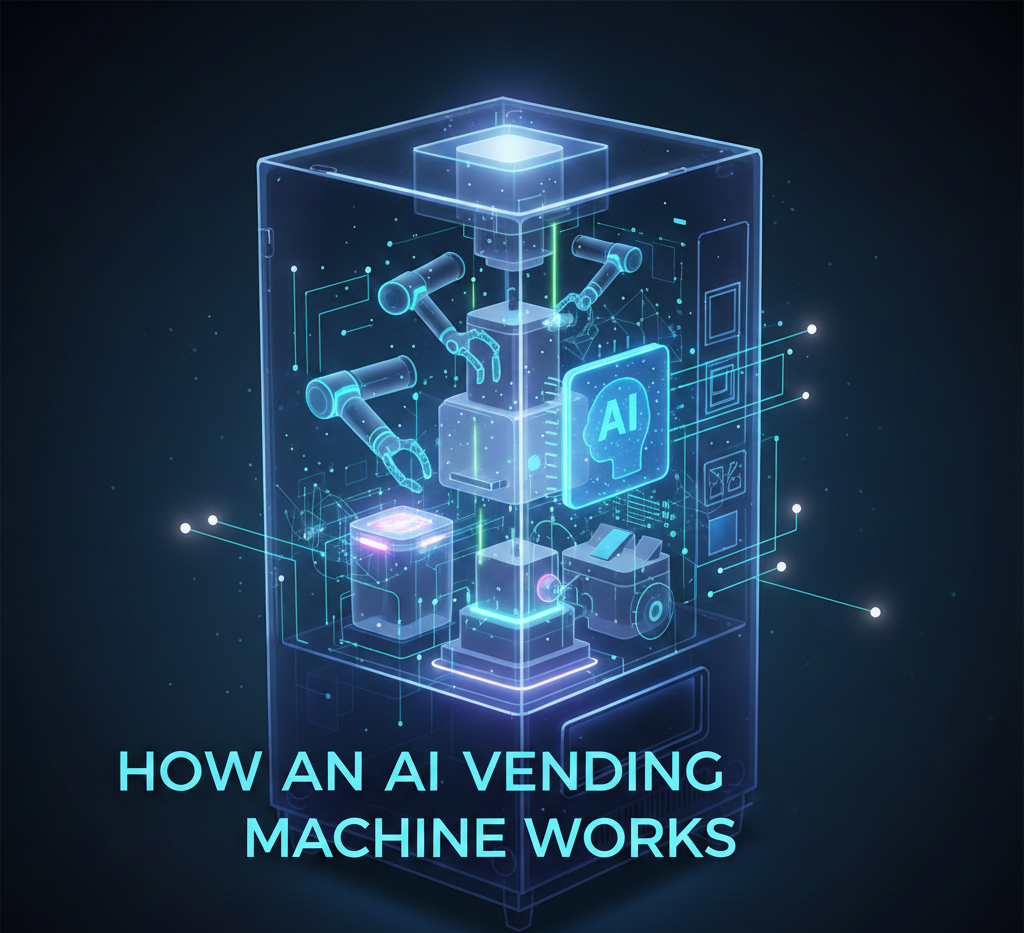
Step 2: Smart Cameras Track Product Movement
High-resolution cameras inside the machine monitor:
- Hand movement
- Item placement
- Product removal
AI-powered computer vision identifies each product visually.
Step 3: Sensors Confirm the Selection
Weight sensors and shelf sensors verify:
- Which product was taken
- How many units were removed
This double-check system improves accuracy.
Step 4: AI Processes the Transaction
The AI software instantly:
- Matches the product
- Calculates price
- Updates inventory
- Logs the transaction
All of this happens in seconds.
Step 5: Automatic Payment and Receipt
When the door closes:
- The linked payment method is charged
- A digital receipt is sent
No cashier. No checkout line.
Also Read: Fireworks.ai Products Services: A Complete Guide to Offerings, Use Cases, and Value
Key Technologies Behind AI Vending Machines
Computer Vision
Computer vision allows the system to visually recognize products, even when items are similar in size or shape.
Machine Learning
Machine learning improves accuracy over time by learning from:
- Customer behavior
- Product placement
- Lighting conditions
IoT Sensors
Internet of Things (IoT) sensors track:
- Weight changes
- Temperature
- Machine health
Cloud Connectivity
Cloud systems allow operators to:
- Monitor inventory remotely
- Analyze sales data
- Predict restocking needs
Why Businesses Are Adopting AI Vending Machines
Faster Shopping Experience
Customers can complete purchases in seconds, improving satisfaction.
Lower Operating Costs
No full-time staff is required for checkout or daily operation.
Better Inventory Management
Stock levels update automatically, reducing waste and missed sales.
Data-Driven Decisions
Operators gain insights into:
- Best-selling items
- Peak usage times
- Customer preferences
AI Vending Machine vs Traditional Vending Machine
| Feature | Traditional Vending | AI Vending Machine |
|---|---|---|
| Product selection | Buttons | Grab-and-go |
| Inventory tracking | Manual | Automatic |
| Checkout | Cash/card | AI-based |
| User experience | Basic | Seamless |
| Restocking alerts | Manual | Automated |
Where AI Vending Machines Are Used in the USA
AI vending machines are widely deployed in:
- Corporate offices
- Airports and transit hubs
- Hospitals and healthcare centers
- Universities
- Co-working spaces
Their 24/7 availability makes them ideal for high-traffic locations.
Also Read: AI-Driven Reduced Workweek: How Artificial Intelligence Is Reshaping the Future of Work
Are AI Vending Machines Secure?
Yes. Modern AI vending machines use:
- Encrypted payments
- Secure cloud servers
- Fraud-detection algorithms
Cameras are designed to track products, not faces, helping protect user privacy.
Market Growth and Industry Data
The global smart vending market is growing rapidly. According to Grand View Research, the smart vending market is expected to grow at a double-digit CAGR through the decade, driven by AI and cashless payments.
Retail automation is also a key trend highlighted by McKinsey.
Challenges of AI Vending Machines
Despite the benefits, challenges include:
- Higher upfront hardware costs
- Dependence on internet connectivity
- Initial AI model training
However, long-term efficiency and reduced labor costs often outweigh these issues.
Future of AI Vending Machines
The future of the AI vending machine in the United States looks strong. As AI improves, machines will offer:
- Higher accuracy
- Lower costs
- Personalized product recommendations
AI vending is expected to become a core part of smart retail ecosystems.
Final Thoughts
An AI vending machine combines artificial intelligence, cameras, and smart sensors to create a fast, cashierless shopping experience. By removing friction from retail, these machines benefit both customers and businesses.
At Tonic Of Tech, we cover how AI and emerging technologies are transforming retail, automation, and everyday life. Explore our latest insights to stay ahead of technology trends shaping the future.
FAQs: AI Vending Machine
1. What is an AI vending machine?
An AI vending machine is a smart retail system that uses cameras, sensors, and artificial intelligence to automatically detect items taken and process payment without manual checkout.
2. How accurate are AI vending machines?
Most modern systems achieve very high accuracy by combining computer vision with weight sensors and continuous machine learning improvements.
3. Do AI vending machines require an app?
Some require an app or QR code, while others allow direct card tap. This depends on the machine provider.
4. Are AI vending machines expensive?
They cost more upfront than traditional vending machines, but lower labor costs and better inventory control improve long-term ROI.
5. Where are AI vending machines most common?
They are most common in offices, airports, hospitals, universities, and other high-traffic locations in the USA.