
How Many Years of Software Updates Does Samsung Offer? Promise vs Reality
Samsung promises 7 years of updates, but does that actually mean what it sounds like? Right now, the Galaxy S26 Ultra offers a genuinely concrete answer worth paying attention to: Samsung’s own flagship spent over four months and seven separate beta builds working through One UI 9, with its global stable rollout pushed back yet again just this September. That’s the gap between promise and delivery, playing out in real time.
This isn’t a one-sided complaint piece, this tension exists across the industry, not just at Samsung, and understanding it properly actually makes for a smarter phone purchase. Let’s get into what the promise really covers, where the gap shows up, and how to judge any update commitment with real confidence going forward.
The Promise—What Samsung Actually Commits To
The Headline Number: 7 Years
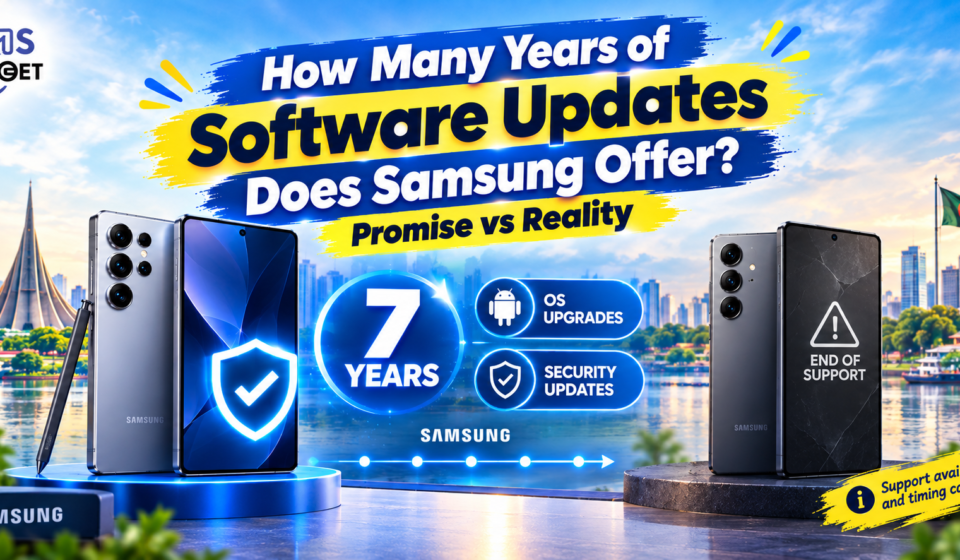
Starting with the Galaxy S24 series in January 2024, Samsung committed to seven years of both Android OS upgrades and security updates, directly matching Google’s own Pixel 8-era pledge. That commitment has since carried forward through the Galaxy S25 and S26 families and extended to newer foldables (Z Fold6/Flip6 onward) and select premium tablets, with over 130 total models now covered under some tier of Samsung’s broader update commitment.
The Tiered Reality—Not Every Device Gets the Same Promise
Here’s the part headlines often gloss over: the full 7-year commitment applies specifically to flagship S, Z, and select tablet lines. Many other devices from 2019 onward get a genuine, real baseline—typically at least 3-4 years of OS upgrades and 4 years of security updates, but that’s a meaningfully different promise than the flagship tier gets. The Galaxy A55 and A35, for example, were confirmed to receive four years of OS updates and five years of security updates, like their predecessors, rather than the full seven-year flagship treatment, a genuinely useful thing to check before assuming “Samsung phone” automatically means “seven years,” regardless of which model.
OS Upgrades vs. Security Updates — Not the Same Commitment
An OS upgrade is a major version jump—new features, interface changes, and a genuinely different experience. A security update is smaller and far more frequent, patching vulnerabilities without necessarily changing anything visible. Samsung has historically been slower to deliver monthly security patches specifically to lower-tier devices, even when those devices are technically still well within their eligibility window on paper.
The Reality—Where the Gap Shows Up?
The One UI 9 Rollout Saga
This is the freshest, most concrete example available right now. Samsung’s Galaxy S26 series worked through seven separate beta builds of One UI 9 (Android 17) before reaching a stable release, an unusually long testing cycle even by Samsung’s own typical development pace. The stable rollout finally began in South Korea in mid-September, with a planned global rollout date of September 21 that Samsung then quietly pushed back another week to September 28. After more than four months of beta testing, that last-minute delay understandably frustrated a lot of early adopters who’d been waiting the whole time.
A Current, Concrete Example — Left Behind by a Cheaper Sibling
Here’s the detail that captures the whole tension perfectly: Samsung launched the more budget-friendly Galaxy S26 FE with the stable, finished version of One UI 9 right out of the box—while the flagship S26 and S26 Ultra, which cost considerably more and were promised the industry’s longest update commitment, were still stuck in beta testing at the exact same moment. Paying premium prices for the flagship tier doesn’t automatically guarantee a smoother or faster update experience, sometimes it’s genuinely the opposite.
An Ironic Twist — Sometimes Cheaper Devices Update First
This isn’t a one-off fluke either. Samsung’s own community forums have documented newer lower- and mid-range devices receiving One UI updates before flagship models that were promised the longer commitment first — a detail that meaningfully complicates the simple assumption that paying more automatically buys a faster update experience.
Is This Actually a Samsung-Specific Problem?
Google’s Pixel Has Had Its Own Update Problems
To be fair, Samsung isn’t alone here. Google’s March 2026 Pixel update introduced a genuinely serious bug: a fault in how the Tensor chipset managed power states meant phones couldn’t properly enter deep sleep with the screen off, draining 10% or more of battery overnight while sitting completely untouched. The issue affected every Pixel generation from the Pixel 6 through the Pixel 10, and it took until July, four months later, for Google to ship a confirmed fix for its newest flagships, with Pixel 8a and 9a owners waiting even longer into September.
The Real Issue — Confusing Duration With Quality
This is the core insight worth taking away from all of it: “years of eligibility” is an easy number to market and measure, but it says absolutely nothing about rollout speed, stability, or how well problems get handled when they inevitably occur. Duration and quality are two genuinely different promises that get marketed as if they’re one and the same, and they’re not.
A Framework for Evaluating Any Software Update Promise
Four Questions Worth Asking Before the Headline Number Impresses You
- How quickly do major OS updates typically reach non-flagship devices, and does the company publicly explain delays when they happen?
- How often are rollouts paused or reversed after shipping, and how transparently is that communicated to affected users?
- When an update causes real problems, does the company acknowledge and address them promptly in the next cycle—or does it take months, as with the Pixel battery drain bug?
- When a software change removes or limits a feature, do users have any meaningful say or opt-out?
Based on the evidence above, neither Samsung nor Google consistently clears all four of these bars—a fair, balanced conclusion rather than singling out one company as uniquely at fault.
Do You Actually Need 7 Years of Updates?
The Average Person Doesn’t Keep a Phone That Long
Research consistently puts the average smartphone upgrade cycle somewhere around 3.5 to 4 years, meaning most buyers will never personally experience the back half of a 7-year commitment at all. That’s worth reframing honestly: for most people, the real-world benefit of a long update promise isn’t about personally using all seven years. It’s peace of mind, meaningfully stronger resale value, and less working hardware getting prematurely discarded.
Who Actually Benefits Most?
Buyers who genuinely keep devices long-term, budget-conscious buyers who purchase older or secondhand Galaxy flagships expecting continued support well into the future, and anyone deliberately extending a device’s lifespan to reduce e-waste all get real, tangible value out of this—even if the “average” buyer doesn’t experience the full seven years personally.
For anyone weighing whether an older flagship’s remaining update window still makes sense against buying newer, comparing current Samsung mobile price listings across generations is a genuinely useful way to see where that trade-off actually lands.
Customer Support Is Part of “Reality” Too
Update Quantity Has Improved More Than Update Experience
Here’s a fair point worth sitting with: Samsung’s update policy itself has improved dramatically over the past few years, genuinely, substantially better than it used to be. But the troubleshooting and support experience when updates actually cause problems hasn’t necessarily kept pace with that improvement. A complete picture of “reality” isn’t just whether updates eventually arrive—it’s how well-supported users actually are when something goes wrong during or right after installation.
Whatever the brand, and if it’s time to actually buy, an established Samsung mobile shop is a solid place to compare current options with real confidence.
Frequently Asked Questions
How many years of software updates does Samsung actually promise?
Samsung promises seven years of both major Android OS upgrades and security updates for its flagship Galaxy S series (starting with the S24), Z series foldables (Z Fold6/Flip6 onward), and select premium tablets, with other devices from 2019 onward getting a shorter baseline, typically 3-4 years of OS updates and at least 4 years of security patches.
Is the 7-year update promise the same for all Samsung phones?
No. The full seven-year commitment is specifically tiered to flagship and premium devices. Many mid-range and budget models, including certain A-series phones, receive a shorter commitment, often four years of OS updates and five years of security updates, so it’s worth checking the specific model rather than assuming the headline number applies universally.
Why is One UI 9 taking so long to roll out to some devices?
Samsung’s Galaxy S26 series went through seven separate beta builds over more than four months before reaching a stable release, with the global rollout then delayed by an additional week past its originally announced date, an unusually long cycle even by Samsung’s own typical timeline.
Is Samsung worse than Google/Pixel for update reliability?
Not clearly, both companies have had genuinely serious, well-documented update problems recently. Samsung’s One UI 9 rollout faced extended delays, while Google’s Pixel line dealt with a four-month-long battery drain bug affecting nearly every recent Pixel model. Neither company has a clean track record here.
What’s the difference between an OS upgrade and a security update?
An OS upgrade is a major Android version jump bringing new features and interface changes, released roughly once a year. A security update is a smaller, far more frequent patch that fixes vulnerabilities without necessarily changing anything visible to the user.
Final Thoughts
Samsung’s 7-year update promise is a genuinely industry-leading commitment on paper, and the tiered system now covering 130+ models is a real, meaningful improvement over Android’s earlier update-support era. But the recent, very concrete Galaxy S26 situation, a flagship stuck through seven betas while a cheaper sibling shipped with the finished software first, shows clearly that eligibility duration and timely, reliable delivery are two genuinely different things.
This tension exists industry-wide, not just at Samsung. Google’s own four-month Pixel battery bug proves that. Anyone evaluating a phone’s update promise going forward should ask about rollout speed and transparency, not just the total years advertised on the box. Use the four-question framework above on the next purchase.