
Machine Learning for Financial Entity Resolution: Solving the Name Matching Problem at Scale
Entity resolution (ER), the process of identifying and linking different manifestations of the same real-world entity, is one of the most persistent hurdles in financial data science. Within the unclaimed property ecosystem, the challenge is amplified by scale and entropy. We are tasked with matching “John Smith” across 50+ independent state databases where records may span decades, often riddled with OCR errors, missing middle initials, or outdated addresses.
Traditional deterministic string matching fails at this government scale. While a simple exact match is computationally cheap, it frequently misses upwards of 60% of legitimate links due to human error and data decay. To restore citizens of billions of dollars, we need to rethink brittle systems of rules and adopt probabilistic machine learning models. Using deep learning, Siamese networks and enhanced blocking, engineers will be able to develop robust systems with millions of names that can be resolved with high precision and recall.
The Entity Resolution Problem in Unclaimed Property
The primary barrier to effective record linkage is the lack of a universal identifier. Privacy laws often restrict the use of Social Security Numbers in public-facing search indices, forcing systems to rely on “fuzzy” attributes. Data quality varies wildly: one state may record “Rob J. Miller,” while another holds “Robert Miller Jr.” at a historical address. The feature space is further complicated by cultural peculiarities, e.g. the differences in the order of names or hyphenated surnames.
Older methods are generally based on phonetic algorithms such as Soundex or Metaphone, which tend to be too rough to be accurate enough to meet financial quality. Similarly, calculating the Levenshtein distance between every pair in a billion-record dataset results in an O(n2) complexity that is computationally prohibitive. For a deeper dive into the foundations of this challenge, Identifying Real-World Entities in Noisy Data remains one of the references for probabilistic matching logic.
Machine Learning Approaches to Entity Resolution
Modern ER pipelines treat name matching as a binary classification or similarity learning problem.
Probabilistic Linkage and Feature Engineering
At the foundational level, we use Expectation-Maximization (EM) algorithms to estimate the probability that two records are a match. Feature engineering is critical here; we transform raw strings into a vector of similarity scores using Jaro-Winkler, cosine similarity, and n-gram overlaps. We also incorporate contextual features like date-of-birth (DOB) proximity and frequency-based weights matching a rare surname like “Quizzledorf” provides significantly more information than matching “Smith.”
Deep Learning and Embeddings
To perform state-of-the-art, the strings of name of the states are projected into a high-dimensional latent space using Siamese Networks. The contrastive loss objective is used to train the model to achieve a minimum Euclidean distance between the embedding of Rob and Robert. Transformer-based models, including BERT, can further reflect the dependencies in sequences in business names or intricate addresses. Embedding based methods have been shown by research on the Google AI Blog to perform much better than conventional edit-distance metrics in noisy settings.
Blocking and Indexing
To solve the O(n2) problem, we implement “blocking.” Such methods as Locality-Sensitive Hashing (LSH) or Canopy Clustering put similar records into buckets, so that the ML model only compares the candidates that have a high a priori probability of matching, narrowing the search space to O(n log n).
Building a Production ML System for Entity Resolution
A strong data pipeline infrastructure is needed to transport a model out of a notebook into the production setting. The system needs to be fed with heterogeneous data, clean it up with rigorous data cleaning (e.g. by eliminating non-alphanumeric characters, normalizing suffixes), and provide predictions within the latency of less than 100ms.
An entity matching system suitable in production settings needs to be both precise and recall-oriented, as well as deal with millions of queries every day, demanding specific attention to optimizing both the ML models and the hardware.
Training and Evaluation
Since true matches are very scarce in the wild, we have a colossal imbalance in the classes. We mitigate this through:
Active Learning: Only labeling the most “uncertain” pairs near the decision boundary to maximize labeling efficiency.
Synthetic Data: Adding edge cases (typos, first/last name swapped) to test the model.
F1-Score Optimization: Both false positives (wrongful claims) and false negatives (missed property) are costly so the F1-score is a more credible measure than mere accuracy.
Deployment at Scale
For high-volume batch processing, Apache Spark is the standard for distributed inference. To be searched in real time, models are typically exported into either TensorFlow Serving or ONNX format, which are subsequently queried using API. The drift of data should be watched on a constant basis; naming conventions evolve over decades, and the model performance should be checked on the newly obtained ground-truth data.
Advanced Techniques and Research Directions
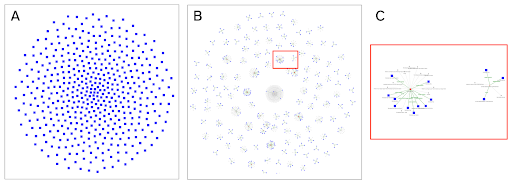
The frontier of entity resolution lies in Graph-Based Methods. By treating records as nodes and matches as edges, we can apply community detection algorithms to find transitive links (e.g., Record A matches B, and B matches C, therefore A matches C). Knowledge graph embeddings help resolve corporate entities by understanding parent-subsidiary relationships during mergers and acquisitions.
Furthermore, Fairness and Bias in ML have become paramount. Cultural naming patterns must be represented equitably to ensure that minoritized populations do not experience higher false-negative rates. Resources such as the ACM Conference on Fairness, Accountability, and Transparency (ACM FAccT) provide frameworks for auditing these models to ensure compliance with ethical and regulatory standards.
Implementation Best Practices
When building an ER system for government applications, start with a “Garbage In, Garbage Out” mentality. Invest heavily in the standardization layer, normalize addresses to USPS standards and names to a consistent casing. Start with a simple baseline Logistic Regression or XGBoost model based on string similarity features and then dive into deep learning. This gives it a benchmark and makes the decisions of the model easier to interpret in the case of regulatory audits.
At the organizational level, promote cooperation between data scientists and business specialists. Treasury analysts are well aware of the limitations of old data, e.g., a certain code in the 1980s, which a model would have interpreted as noise.
Also Read: Recovery Home Management Software Solutions: The 2026 Buyer’s Guide
Conclusion
Machine learning is no longer optional for multi-state entity resolution; it is the only way to navigate the noise of billions of financial records. By implementing probabilistic matching and deep embedding architectures, organizations can achieve 95%+ accuracy, far exceeding the capabilities of legacy systems. Transform your unclaimed property matching from guesswork to data science, implement ML-powered entity resolution today. The goal is clear: better matching leads to more citizens being reunited with their rightful property through a faster, more reliable, and more equitable financial system.