
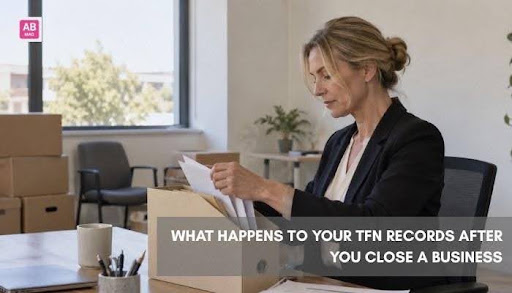

You cancelled a few registrations, closed the bank account, and moved on. But your tax file number didn’t get the memo, because your TFN stays active long after you stop trading.
The ATO still expects you to lodge returns, hold onto records, and cancel registrations that are still linked to your name. That’s exactly why we cover the TFN after closing business process at Australian Business Magazine.
In this guide, you’ll learn which obligations still apply, what to do with your ABN, and how to avoid penalties down the track.
Your Tax File Number Doesn’t Disappear After Closing Your Business
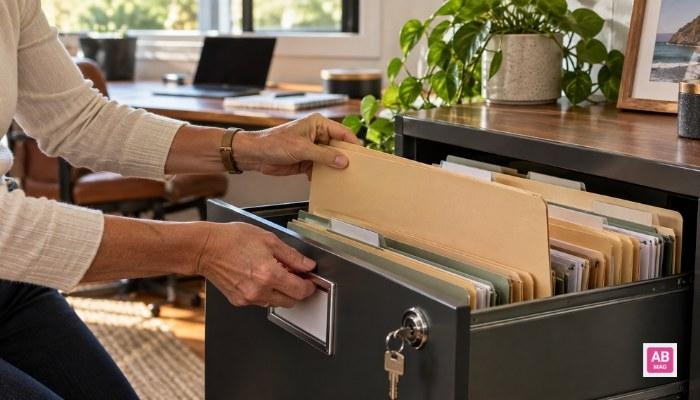
As we briefly mentioned, your TFN doesn’t retire when your business does. The ATO issues every tax file number as a permanent, lifelong identifier that stays with you forever.
If you operated as a sole trader, you used your individual TFN for both personal and business tax returns (same number, same obligations, different hat). Companies and trusts receive their own separate TFN when they register, but the ATO holds onto those records even after closing your business.
So if you lodge personal tax returns, claim deductions, or pick up a salary from a new employer later on, your TFN is right there waiting. Now, let’s look at how long those business records actually need to stick around.
What the ATO Expects From Your Business Tax Records

That filing cabinet you were about to toss? Hold off on it. The ATO requires you to keep your records after closing a business for at least five years from the date you lodge your final tax returns. We’ve covered enough business closures at Australian Business Magazine to know this is the step most businesses rush through.
The ATO’s business record-keeping requirements break down into three main categories, and each carries its own obligations:
- Income and Expense Records: Keep every sales record, invoice, and receipt for purchases and payments tied to your business income. If a tax review lands on your doorstep two years from now, these are the first documents the ATO will ask for.
- Employee Payment Summaries: Hold onto your employees’ wage records, payment summary annual report data, and superannuation contributions. If the ATO audits a former employee’s tax return, they’ll pull these straight from your files.
- Depreciating Asset Documents: You need to keep records of depreciating assets for as long as you own them, plus another five years after selling or disposing of them. Capital gains tax records related to property or shares follow the same rule.
For example, a sole trader in Brisbane who sold a work vehicle in 2024 would still need the original purchase documents on file until at least 2029. The safe move is to store everything digitally, label it clearly, and forget about it until the five years are up.
What Happens to Your TFN Records After You Close a Business
Cancelling your registrations properly will save you from ATO follow-ups and reporting deadlines that should have ended when trading stopped. This is the step that trips people up most, based on what we’ve seen every tax season.
The process itself is free and fairly quick when closing your business. But cancelling in the wrong order can leave you with open obligations tied to registrations still sitting active on your ATO account.
Specifically, two areas need your attention before you move on:
Cancelling Your Australian Business Number
You can cancel your ABN through the Australian Business Register website or ask your registered tax agent to handle it. Just make sure you’ve finalised all outstanding tax returns and BAS lodgements first, because the ATO will reject a cancellation with loose ends.
Once the ABN is cancelled, your GST, luxury car tax, and fuel tax credits registrations go with it automatically.
GST, PAYG, and Other Active Registrations
Not all tax registrations cancel with your ABN, though. If you had employees on your payroll, you need to cancel your PAYG withholding registration separately before you close the ABN.
If you don’t, the ATO will keep sending you reporting notices for wages and employee payments long after you stop operating. Most tax registrations follow a similar pattern, so check each one against your ATO obligations before you wrap everything up for good.
Your Final BAS, Services Tax, and Fringe Benefits Tax Still Need Lodging
You might have stopped trading in March, but the ATO still expects to hear from you.
Your final business activity statement (BAS) covers everything up to the exact date your business stopped operating, even if that falls mid-quarter. That means you need to lodge it, report your GST on any remaining sales, and pay whatever you owe before you cancel your registrations.
The BAS isn’t the only thing left on the list, either. When giving employees non-cash benefits like company cars or private health cover, you may also need to file a final fringe benefits tax return.
Apart from that, you should check for any open services tax obligations still tied to your GST account. And if your final BAS shows more GST paid on purchases than collected on sales, you can still claim those credits back (worth checking before you walk away).
The ATO lists your final business tax obligations by category, so use that as a checklist when you lodge. What comes next depends on how your business structure was set up in the first place.
How Your Business Structure Affects Your Australian Company Number
Your wind-down checklist looks completely different depending on how you set up your business structure.
If you ran a sole trader or partnership, you don’t hold an Australian company number, so ASIC isn’t part of your process at all. Companies, however, need to formally deregister with the Australian Securities and Investments Commission before the business can officially close.
Here’s what each structure looks like at the closure stage:
| Business Structure | ACN | ASIC Deregistration | Final Tax Return | Other Steps |
| Sole Trader | No | No | Lodge under personal TFN | Cancel ABN, settle debts |
| Partnership | No | No | Lodge partnership return | Cancel ABN, notify partners |
| Company (Pty Ltd) | Yes | Yes (Form 6010, $52) | Lodge company tax return | Distribute assets, pay debts, cancel licences |
| Trust | No (unless corporate trustee) | Only if corporate trustee | Lodge trust return | Notify ATO, sell or transfer assets |
Running a company in the past means ASIC will retire your Australian company number once deregistration goes through.
The ACN stays on the ASIC register permanently, so your company’s record never disappears. For sole traders and partnerships in places like Parramatta or the Gold Coast, the process is much simpler. You won’t have a company to wind up, permits to hand back, or ASIC forms to file.
One more thing to keep in mind before you close: selling business assets can prompt a capital gains tax event depending on your circumstances, so factor that into your plan early.
Professional Advice Still Counts After Your Business Registrations Close
Once all of that is squared away, one question remains: is it worth paying an accountant to review your closure?
The founders we’ve spoken to at Australian Business Magazine almost always say yes, because a one-off consultation saved them from chasing down missed lodgements months later. A registered tax professional can spot overlooked obligations like capital gains tax events, missed superannuation payments, or tax returns you forgot to lodge.
And if any of those go unresolved, the ATO can charge penalties of $330 for every 28 days a return stays unlodged (not the kind of mail you want six months later). Most businesses only find out about these gaps well after closing their companies, which is why professional advice tends to pay for itself.
The ATO also offers free assistance and support services for small business owners who are wrapping up. Start there if you’re not ready for a paid consultation just yet.