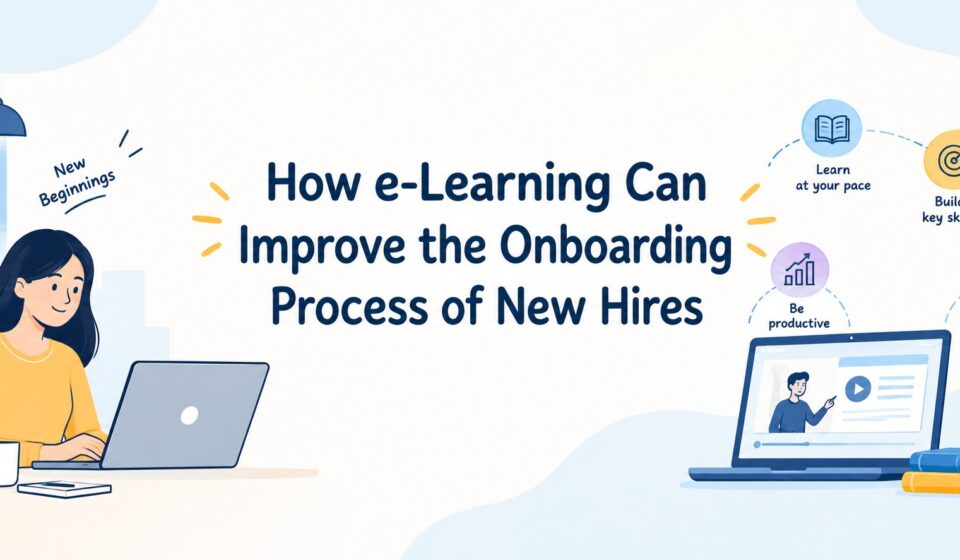

Now more than ever before, onboarding your employees effectively is important. It determines the future success of the newly hired employee at your organization. Yet, traditional methods of onboarding can be laborious and may fail to effectively assimilate your newly hired employees. Enter e-learning, the latest innovation that revolutionizes the process of onboarding by combining technology with learning. Let us consider how e-learning can improve the process of onboarding for your new hires.
Benefits of e-Learning for the Process of Employee Onboarding
1. Explains Company Policies to New Hires
Getting new personnel acquainted with business policies and procedures is one of the main goals of onboarding. eLearning can assist you in offering a more dynamic and captivating approach rather than burying them under a tonne of paperwork or a long manual.
You may provide succinct policy explanations and assist new hires in understanding expectations right away by using corporate policy videos. To help nursing professionals stay current on regulatory compliance for licensing and other legal requirements, travel nurse companies, for instance, employ eLearning systems. Online sharing of protocol and procedure information is simple, and quick tests can be used to gauge how well the onboarding process went. eLearning increases the effectiveness and efficiency of policy comprehension through the dynamic and visual presentation of knowledge.
Expert advice
Utilise AI speech technologies to deliver interactive, personalised audio instructions and feedback. This facilitates new personnel’ assimilation of knowledge and makes them feel involved right away. Read more info on laws in 2026.
2. Discloses Workplace Culture
A company’s culture is its lifeblood. Through immersive experiences, eLearning tools can assist in acquainting new personnel with organisational principles and company culture. eLearning helps new hires get fully immersed in your company’s culture through everything from captivating company background videos that highlight your organization’s journey to “the way we work” videos that illustrate cultural conventions and values.
3. Simplifies Training for Staff
Learning from e-learning can happen at the convenience of the employees themselves because of the self-paced modules available. It can also help in making sure that the onboarding process of the new hires will always turn out to be positive as they are able to train themselves at their own pace. Incorporate evaluations to monitor the progress of new hires and reinforce learning objectives.
Additionally, you can develop training materials for a variety of learning preferences and styles using eLearning tools.
4. Aids in the Process of Paperwork Completion for New Employees
The process of paper filling related to the new job for the new employee might be intimidating, as there are plenty of other things that they have to do. The process of doing paperwork related to their new job becomes easy with the help of eLearning, as the new employees will be guided step by step on how to fill out the forms such as direct deposit.
5. Highlights Benefits Packages and Additional HR Information
It’s not always easy to select the best HR benefits package. In any case, you may make all these aspects simple for the user through the use of interactive movies, slides, and infographics.
Furthermore, you can use HRIS software in your online learning tool. You can better match onboarding goals with long-term performance goals and services like employers of record by integrating eLearning platforms with performance management systems. You may pinpoint areas for improvement and adjust upcoming onboarding procedures by monitoring Key Performance Indicators, staff advancement, and skill growth over time.
6. Reduces Expenses and Offers An Additional Source of Profit
The expenses related to employee onboarding can be greatly decreased by using e-learning. eLearning is an affordable option for businesses of all sizes because there are no costs associated with venue rental, travel, or printed materials.
Additionally, you can turn some of the eLearning resources your business has created into digital goods and market them to appropriate businesses. For example, you could design a course titled “How to Start Your Journey as a Travel Nurse” or “How to Know if an Organization’s Company Culture is Right for You.”
7. Identifies New Hires Who Might Not Be Fit for Their New Positions
Prioritising employee retention when someone isn’t a good fit for the position might result in greater financial losses, even if recruiting a new employee is a big investment for many businesses. You can monitor how new hires are moving through the employee onboarding process by combining eLearning tools with employee monitoring software such as Controlio. This might assist you in determining whether team members are not finishing the necessary documentation on time and failing assessments. Additionally, you have the opportunity to provide additional training and support to help new hires get back on track, or to sever relationships if necessary.
8. Assists in Building Relationships and Group Work Training
During company lunch breaks and group training, eLearning can assist new hires in forming deep connections. Positive employee experiences and increased retention rates are encouraged by this. Additionally, you can use group training sessions to identify common pain issues among your new hires. This highlights a crucial hole in your onboarding program that you may close to encourage a more interesting onboarding process.
Conclusion
Firms can cut costs, educate both physically present and virtual employees, and speed up the onboarding process using eLearning. You can give your new hires a dynamic experience by utilising an eLearning platform and incorporating other pertinent applications, such as HRIS and AI voice-overs. Additionally, you can establish a one-stop shop to monitor employees’ skill sets and training module progress. This not only simplifies your process, but it also aids in identifying areas where staff members can progress into new positions.