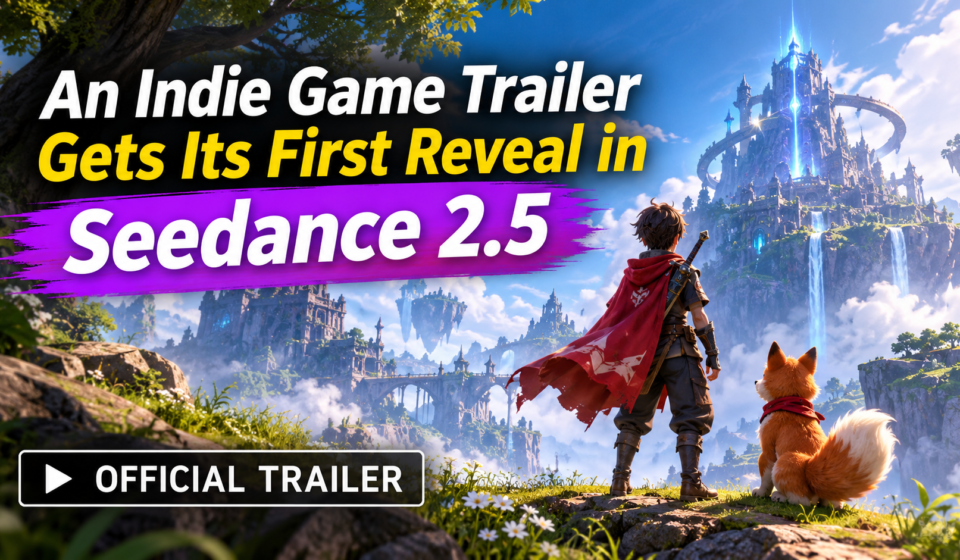

The gate is taller than the traveller, but the shadow behind it is taller still. That would be the opening idea for a fictional indie game’s short announcement trailer. I would want the audience to notice the scale of the place before seeing the creature. The proposed film would communicate a visual direction for the game, clearly presented as a concept trailer rather than captured gameplay.
My starting assets would be a character sheet, a sketch of the ruined gate, and a rough drawing of the creature’s silhouette. I would keep the traveller’s costume simple: a short blue coat, a pale scarf, and a small shoulder bag. Those details would give the figure a recognisable outline without asking the model to preserve a complicated collection of buckles, weapons, and moving accessories.
The reveal would depend on restraint. Instead of showing the creature charging into view, I would let its shadow cross a narrow band of light behind the gate. A single moving shape could establish the threat while leaving the actual design open for discussion. That would make the clip useful early in development, when the team may still be deciding how much of the creature to show.
Set the camera at the traveller’s height
I would place the camera just behind the traveller’s right shoulder. The scarf would sit near the lower edge of the frame, with the broken arch ahead and a gap of pale sky beyond it. This angle would share the character’s uncertainty. A high aerial view would explain the environment too quickly and make the figure feel like a marker on a map rather than someone approaching a dangerous place.
The character and gate sketches would become separate references in Seedance 2.5, with each assigned a clear job in the prompt. The character sheet would guide appearance; the environment drawing would establish the arch, fallen stone, and distant light. I would then describe a slow approach ending before the traveller steps through. That boundary would keep the clip focused on anticipation rather than a complex encounter.
My first version would run for twenty seconds. During the first eight, the camera would follow two small steps toward the gate. Between seconds eight and fourteen, the traveller would stop and the shadow would pass behind the opening. The remaining six seconds would hold on the still figure. I would leave room for a title added later, after the image has already delivered its question.
Keep the references from fighting each other
The environment sketch would show the same light direction I want in the finished shot. If it suggested a bright midday scene while the prompt requested a dark evening, the model would have competing instructions. I would prepare a simple colour version with cool stone, a pale opening, and a warmer patch of light on the traveller’s sleeve. That would establish a coherent palette before adding movement.
Seedance 2.5 accepts multiple image references, but more files would not necessarily improve this sequence. I would avoid including several alternate costumes or three different gate designs. The purpose of the first draft is to explore one staging idea. Unchosen concept art belongs outside that generation, where the team can compare it without accidentally blending incompatible designs.
I would also resist adding a reference for every texture. The worn stone, ground, and coat can support the shot without becoming separate visual assignments. The silhouette of the traveller and the shape of the arch matter most. If those remain readable in a small phone preview, the scene has a useful foundation even before fine surface detail is considered.
Let one movement carry the threat
My direction for the creature would describe only the passing shadow. It would move from left to right behind the opening, pause briefly, and disappear. I would not ask for eyes, claws, smoke, and falling debris at the same time. A restrained reveal would give viewers something to imagine and reduce the number of moving elements that need to remain consistent.
In a Seedance 2.5 draft, I would pay particular attention to whether the shadow behaves like a shape cast into the scene. If it looks painted on the gate or changes direction halfway through, I would simplify it to a dark silhouette crossing the distant light. The intended feeling matters, but the image still needs a spatial logic that the viewer can follow.
The traveller would react with a small pause and a slight lift of the head. A dramatic recoil could imply an action scene that the trailer is not prepared to deliver. I would keep the character facing away so the reaction depends on posture rather than a detailed facial expression. That choice would also preserve the mystery of the fictional protagonist.
Build the soundtrack around the stop
The first sounds would be footsteps on loose stone and a little wind through the arch. When the traveller stops, the footsteps would leave a noticeable gap. I would place a low, brief sound behind the gate during the shadow’s crossing, then return to wind. The absence of movement could become more effective than a continuous rising soundtrack.
Because Seedance 2.5 generates sound alongside video, I would describe those cues at the relevant moments in the prompt. I would still listen for misplaced footsteps or an overly loud creature sound. If the generated audio announced the threat before the shadow appeared, I would revise the timing or replace the effect in the edit. The reveal should remain a coordinated visual and audible moment.
Revise before polishing the stonework
I would start with a 480p preview and judge the sequence in terms of distance, timing, and silhouette. A detailed stone texture would not rescue a reveal that arrives too early. If the shadow crosses while the traveller is still walking, I would extend the pause and move the cue later. If the figure blocks the gap, I would shift the camera slightly to the right.
After the Seedance 2.5 draft worked at that level, I would consider a higher-resolution final. That separate generation would be reserved for the chosen staging. The final edit would add the title and any release information as clean graphics, keeping text out of the generated environment. I would use only confirmed project details, with no invented platform announcement or launch date.
The resulting deliverable would be a twenty-second concept trailer and a short silent excerpt for a development update. Seedance 2.5 would help explore a visual promise that the actual game could later refine. The gate, the pause, and the passing shadow would do the work. By ending before the encounter, the film would give the audience a reason to wonder what lies beyond the arch without pretending to show finished gameplay.