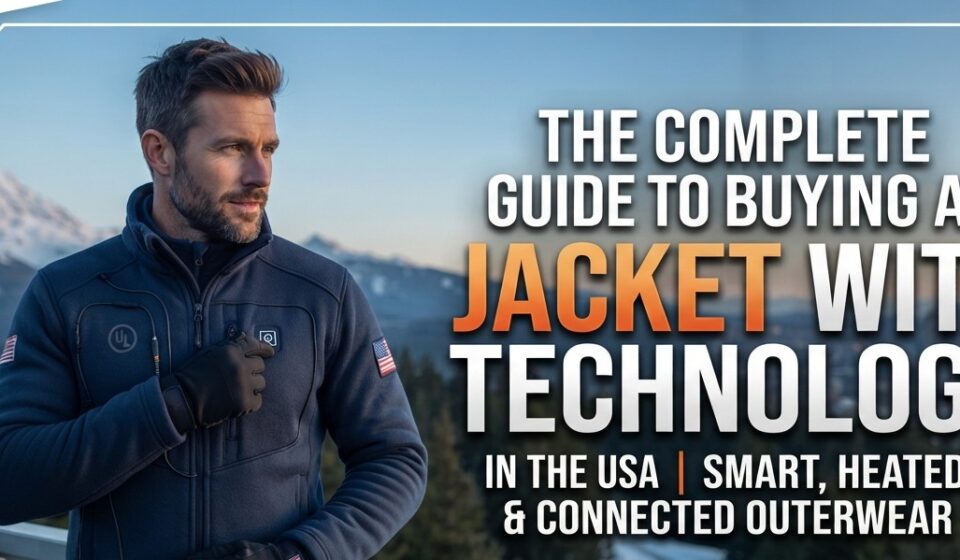

A jacket with technology uses either active wearable electronics—like rechargeable lithium-ion heating grids, graphene conductors, and biometric sensors—or engineered passive textiles such as GORE-TEX ePE membranes to regulate body temperature and protect against extreme weather. In the U.S., reliable tech outerwear ranges from $120 heated work coats to $650 smart alpine shells.
Active Smart Outerwear vs. Passive Technical Jackets
Because U.S. shoppers use the phrase jacket with technology to search for two distinct categories of outerwear, understanding the difference prevents buying the wrong gear:
- Active Tech Jackets (Electronic): Feature built-in power sources, carbon-fiber or graphene heating zones, Bluetooth connectivity, or heart-rate sensors. Best for low-output activities in freezing weather, such as construction work, ice fishing, or stadium tailgating.
- Passive Tech Jackets (Material Science): Rely on advanced polymer engineering—such as GORE-TEX, Polartec Alpha, or phase-change microcapsules—to block wind and vent sweat without batteries. Best for high-exertion backcountry skiing or trail running where electronics add unnecessary weight.
4 Core Categories of Wearable Tech Outerwear
Within the active electronic market, U.S. apparel brands divide wearable outerwear into four functional categories:
- Battery-Powered Heated Jackets: The highest-selling smart outerwear category in North America, utilizing 7.4V or 12V lithium-ion packs to warm chest, collar, and back panels in under 90 seconds.
- Graphene-Infused Thermal Shells: Woven with atom-thick carbon lattices, graphene linings conduct warmth 30% more evenly than traditional wire coils while remaining thinner and lighter.
- Biometric & Athletic Outerwear: Engineered for runners and cyclists, these shells integrate flexible ECG and motion sensors that sync cadence, heart rate variability, and core temperature alerts to Apple Health or Garmin Connect.
- Connected Commuter & Safety Coats: Built for urban cyclists and utility crews, featuring integrated high-lumen LED safety strips, haptic turn-by-turn navigation alerts, or touch-sensitive cuffs for hands-free audio control.
Top Tech-Enabled Jackets in the USA Compared (2026 Benchmarks)
We evaluated top-selling U.S. models based on measured heat-up speed, low-setting battery endurance, weather resistance, and electrical safety certifications.
| Brand & Model | Core Technology | Heat-Up Time (to 110°F) | Measured Runtime (Low) | Typical U.S. Price | Best Use Case |
| ORORO Classic Heated Jacket | 3-zone carbon fiber + USB-C phone charging | 75 seconds | 9.5 hours | $150 – $170 | Daily commuting & casual winter wear |
| Milwaukee M12 Toughshell | HEXON HEAT carbon grid + M12 REDLITHIUM | 60 seconds | 11.5 hours | $200 – $250 | Construction, trades, & rugged job sites |
| Gobi Heat Dune | 5-zone conductive heating + windproof shell | 80 seconds | 9.0 hours | $190 – $220 | Snow sports & sub-freezing recreation |
| Arc’teryx Beta AR (GORE-TEX PRO) | Passive 3-layer ePE micro-porous membrane | N/A (Passive) | Unlimited (No battery) | $600 – $650 | High-output alpine climbing & heavy rain |
| TideWe Heated Fleece | 3-zone fleece heating + 10,000mAh power bank | 95 seconds | 9.5 hours | $100 – $130 | Budget layering & cold-weather hunting |
U.S. Safety Standards & FAA Travel Regulations
Purchasing powered clothing in the United States involves specific electrical certifications and federal aviation rules that do not apply to standard winter coats.
UL & FCC Electrical Certifications
Always verify that both the jacket’s wiring harness and lithium-ion battery carry UL (Underwriters Laboratories) or FCC certification. Certified U.S. brands integrate automatic NTC thermal sensors that cut power immediately if internal temperatures exceed 131°F (55°C), preventing skin burns or electrical shorts during heavy sleet.
TSA & FAA Airline Battery Rules
When flying through U.S. airports, smart outerwear must comply with Federal Aviation Administration (FAA) lithium-ion regulations:
- Carry-On Baggage Only: Lithium-ion battery packs must travel in your carry-on bag or on your person—never inside checked luggage.
- 100Wh Capacity Limit: Standard heated jacket batteries range from 35Wh to 74Wh, keeping them safely under the FAA’s 100Wh passenger limit without requiring airline approval.
- Disconnect Before Boarding: Unplug the battery pack from the jacket’s interior cable before stowing the coat in an overhead bin to prevent accidental activation.
How to Wash and Maintain Electronic Outerwear
Proper care preserves conductive wiring and waterproof coatings across multiple winter seasons. Follow these five steps before machine-washing any powered coat:
- Remove the Battery Pack: Unplug and take the lithium-ion power bank completely out of the interior pocket.
- Seal the Connector: Snap the attached silicone waterproof cap over the exposed USB or DC barrel plug.
- Fasten All Zippers: Close the front zipper, pocket zippers, and battery compartment so cables cannot snag on the washing machine agitator.
- Wash Cold on Gentle: Place the coat inside a mesh laundry bag and wash on a delicate cycle with cold water and mild liquid detergent—never use bleach, fabric softeners, or dry-cleaning chemicals.
- Air Dry Only: Hang the jacket on a wide hanger to line dry; high tumble-dryer heat can crack solder joints and strip Durable Water Repellent (DWR) finishes.
Final Verdict on Choosing Smart Outerwear
Buying a jacket with technology lets you replace bulky, restrictive winter layers with precision climate control tailored to American weather extremes. Choose an active, UL-certified heated shell like the ORORO Classic or Milwaukee M12 if you spend hours stationary in sub-freezing temperatures, or opt for a passive GORE-TEX technical shell if you need lightweight breathability for high-output mountain sports.
Frequently Asked Questions (USA Buyers)
Are heated jackets safe to wear in heavy rain or snow?
Yes, provided the jacket comes from a UL-certified brand with sealed waterproof connectors and an IPX4 or higher water-resistance rating. Always keep the battery pocket zipped shut so moisture cannot pool around the battery terminals.
Can you wear a jacket with technology through TSA airport security?
Yes, you can wear the jacket up to the checkpoint, but TSA officers require you to remove the coat and place it in a screening bin—just like standard outerwear. Keep the disconnected battery inside your carry-on bag for X-ray screening.
Do smart heated jackets emit harmful EMF radiation?
No. Battery-powered heated jackets operate on low-voltage Direct Current (DC) power (typically 5V to 12V), which produces virtually zero electromagnetic field (EMF) radiation and is safe for daily wear.