Approach to Activate, Move Away to Deactivate”—The EWM104-BT13 Bluetooth Proximity Switch: Letting Devices Sense Your Distance

I. What are BLE and Bluetooth Proximity Sensing?
BLE (Bluetooth Low Energy) Technology
BLE is a short-range wireless communication technology characterized by low power consumption, ease of integration, and low cost. Operating in the global 2.4GHz ISM license-free frequency band, it is widely used in various IoT terminal devices. BLE can acquire RSSI (Received Signal Strength Indicator) parameters to determine the relative distance between Bluetooth devices, providing the underlying communication foundation for seamless, proximity-based trigger control.
Bluetooth Proximity Sensing
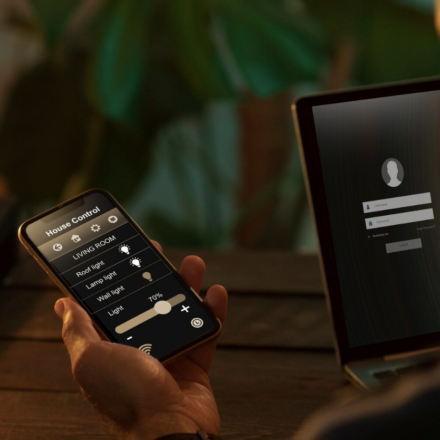
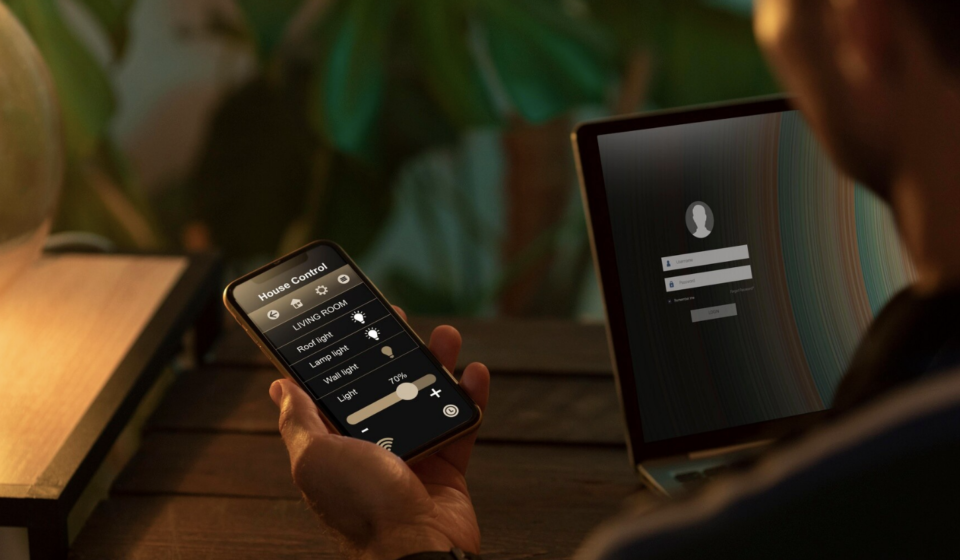
Bluetooth proximity sensing is a distance-awareness solution based on BLE RSSI signal strength detection. By analyzing RSSI signal strength thresholds, the solution determines whether a target device is approaching or moving away and outputs a corresponding switch control signal. It enables “approach-to-activate, move-away-to-deactivate” seamless control without physical contact, making it suitable for applications such as smart homes, industrial automation, security access control, and vehicle key systems.
II. Technical Features of Bluetooth Proximity Sensing
1. Seamless Automatic Triggering: Uses RSSI signal strength thresholds to determine distance; devices activate automatically upon approach and deactivate upon moving away, eliminating the need for manual operation.
2. Flexible Wireless Deployment: Breaks free from wired connection constraints; the module is compact, facilitating embedded integration into various terminal products.
3. Low-Power Operation: Leverages BLE’s inherent low-power characteristics, making it ideal for battery-powered devices and extending battery life.
4. Configurable Parameters: Allows for custom distance thresholds and flexible debugging of sensing trigger conditions via AT commands to suit different operational environments.
5. Multi-Scenario Adaptability: Meets diverse application needs, including consumer electronics for the home, industrial logistics, security access control, and keyless vehicle entry.
6. High Integration & Ease of Development: The module provides simple external control interfaces, eliminating the need for complex Bluetooth protocol development and reducing the difficulty of secondary product development.
III. Bluetooth Proximity Sensing Logic
Bluetooth proximity sensing relies on BLE wireless signal RSSI strength to determine distance. The overall logic consists of three main components: the Bluetooth proximity module, the detected Bluetooth terminal, and the controlled peripheral. 1. Bluetooth terminal to be detected: Bluetooth devices such as mobile phones and Bluetooth keys that broadcast Bluetooth signals.
2. Bluetooth proximity sensing module: Responsible for receiving Bluetooth broadcast signals, analyzing RSSI (Received Signal Strength Indicator) levels, and comparing them against preset thresholds.
Note: The module only handles distance assessment and control signal output; specific operational logic is executed by the controlled peripheral device.
3. Controlled peripheral: Actuators such as door locks, lighting fixtures, mechanical mechanisms, and vehicle locks; these receive signals from the module to perform opening or closing actions.
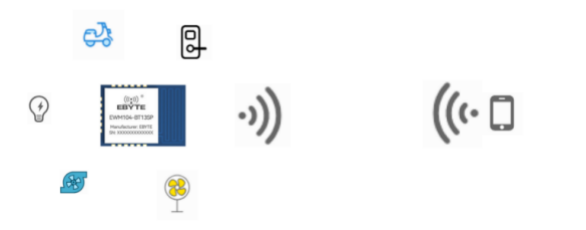
Workflow: When the Bluetooth terminal approaches the module and the RSSI exceeds the set threshold, the controlled device performs an opening action; when the terminal moves away and the RSSI falls below the threshold, the controlled device performs a closing action.
IV. Typical Application Areas
1. Smart home scenarios: Automatic lighting control, hands-free smart door unlocking, and proximity-based smart curtain control;
2. Industrial and logistics scenarios: Material arrival detection at production stations, warehouse inventory movement monitoring, and automated equipment triggering;
3. Vehicle lock/key scenarios: Keyless entry for electric vehicles and automobiles (unlocking upon approach, locking upon departure);
4. Medical and security scenarios: Elderly monitoring, intrusion alarms, and proximity-based identity recognition for access control systems.

Based on the technical characteristics and operational logic requirements of BLE proximity sensing, as well as the core compatibility of Ebyte products, we recommend the EWM104-BT13 series Bluetooth proximity switch modules. Suitable for smart homes, industrial logistics, smart vehicle locks, and security access control, this product series perfectly aligns with key advantages such as hands-free proximity triggering, low power consumption, ease of integration, and flexible configuration. Specific product recommendations are as follows:
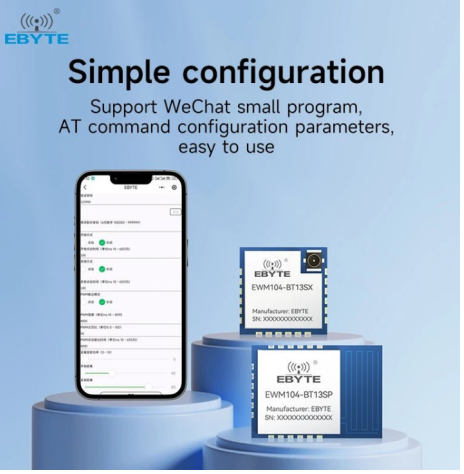
EWM104-BT13 Series: Developed based on the BLE 5.0 protocol and operating in the 2.4GHz ISM band; the series includes two models: EWM104-BT13SP and EWM104-BT13SX. The module features a compact size and excellent power efficiency, supports standard AT commands for parameter configuration, and allows for customizable RSSI detection thresholds to enable proximity-based control (activating upon approach and deactivating upon moving away); it is suitable for applications such as smart door locks, smart vehicle locks, smart home consumer electronics, and industrial control.