

Introduction
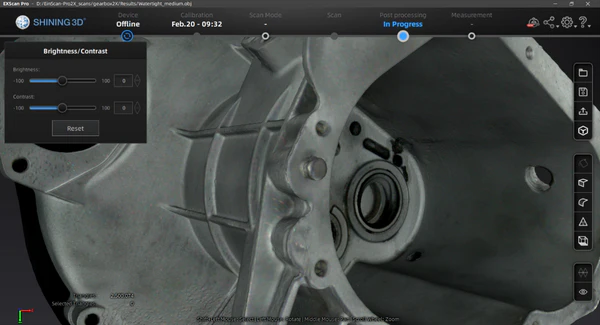
The advancement of modern technology has significantly changed the way industries approach design and manufacturing. One of the most impactful developments is the integration of 3D scanner 3D printed solutions, which allow users to capture real-world objects and transform them into digital and physical models. At the center of this transformation is the handheld 3D scanner, a portable device that offers flexibility, speed, and precision. As businesses continue to adopt digital workflows, these tools are becoming essential for improving productivity and achieving accurate results.
Understanding 3D Scanner 3D Printed Technology
The concept of 3D scanner 3D printed technology revolves around capturing an object’s physical structure and converting it into a digital file that can be reproduced using a 3D printer. A 3D scanner collects detailed surface data, including shape, size, and texture, which is then processed into a digital model. This model can be modified, optimized, and prepared for printing. By combining scanning and printing, users can streamline the entire design process, reduce manual effort, and eliminate the need for traditional measurement techniques. This approach not only saves time but also improves accuracy and consistency across projects.
The Importance of Handheld 3D Scanner Devices
A handheld 3D scanner plays a crucial role in making 3D scanning more accessible and efficient. Unlike stationary systems, a handheld 3D scanner allows users to move freely around an object, capturing data from multiple angles without repositioning the subject. This mobility makes it ideal for scanning objects of different sizes and shapes, from small components to large industrial equipment. In addition, handheld devices are designed to be user-friendly, making them suitable for both professionals and beginners. Their ability to provide real-time feedback during scanning ensures that users can achieve high-quality results with minimal effort.
How Handheld 3D Scanner Technology Supports 3D Printing
The connection between a handheld 3D scanner and 3D scanner 3D printed workflows is what drives efficiency in modern production. Once an object is scanned, the digital model can be refined using specialized software. Adjustments such as scaling, smoothing, or repairing surface imperfections can be made before sending the file to a 3D printer. This process is particularly useful for rapid prototyping, where multiple versions of a product need to be tested quickly. By eliminating the need to design models from scratch, handheld 3D scanners significantly reduce development time and improve overall productivity.
Key Benefits of 3D Scanner 3D Printed Workflows
One of the main advantages of using 3D scanner 3D printed technology is the level of accuracy it provides. Scanners can capture intricate details that are difficult to measure manually, ensuring that the final printed product closely matches the original object. Another benefit is efficiency, as the entire process from scanning to printing can be completed in a relatively short time. This is especially important in industries where speed is critical. Cost-effectiveness is also a key factor, as reducing manual labor and material waste helps lower production expenses. Additionally, the flexibility offered by a handheld 3D scanner allows users to work in various environments without being limited by fixed equipment.
Applications Across Industries
The use of 3D scanner 3D printed technology has expanded across multiple industries due to its versatility. In manufacturing, it is widely used for reverse engineering, enabling companies to recreate and improve existing parts. The automotive and aerospace sectors rely on handheld 3D scanner devices for quality control and maintenance. In healthcare, this technology is used to create customized solutions such as prosthetics and dental models, ensuring a precise fit for patients. Architecture and construction professionals use scanning to create accurate digital representations of buildings, which can then be used for planning and renovation. Even in creative fields such as art and design, handheld 3D scanners are used to digitize sculptures and produce detailed 3D printed replicas.
Enhancing Customization and Design Flexibility
The combination of 3D scanner 3D printed processes with handheld 3D scanner technology allows for a high level of customization. Designers can easily scan an object, modify it according to specific requirements, and produce a personalized version using 3D printing. This is particularly valuable in industries where customization is essential, such as healthcare, fashion, and consumer products. The ability to quickly adapt designs based on real-world data enables businesses to meet customer demands more effectively while maintaining high standards of quality.
Choosing the Right Handheld 3D Scanner
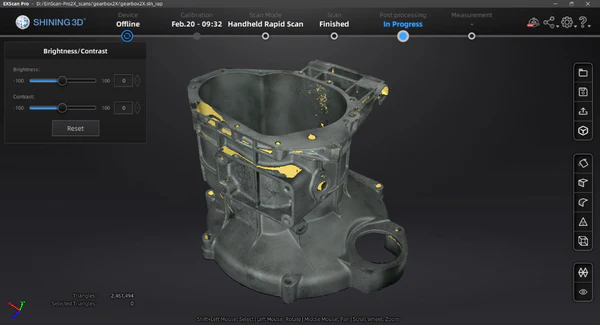
Selecting the right handheld 3D scanner requires careful consideration of several factors. Accuracy and resolution are important for capturing detailed data, especially for complex projects. Scanning speed can impact productivity, making it essential to choose a device that balances speed and precision. Compatibility with software and file formats is also crucial, ensuring that the scanned data can be easily integrated into 3D scanner 3D printed workflows. Ease of use is another factor to consider, particularly for beginners. Finally, budget plays a role, as different models offer varying features and price points.
Future Trends in 3D Scanning and Printing
The future of 3D scanner 3D printed technology is promising, with continuous advancements expected in both hardware and software. Handheld 3D scanner devices are becoming more advanced, offering improved accuracy, faster processing, and enhanced usability. The integration of artificial intelligence is likely to further optimize scanning and modeling processes. As the technology becomes more affordable, it will become accessible to a wider range of users, including small businesses and independent creators. This growth will drive innovation and expand the applications of 3D scanning and printing.
Also Read: 21 Best Study Apps for College Students in 2026 (Free & Paid, Tested)
Conclusion
The evolution of 3D scanner 3D printed technology has transformed the way objects are designed and manufactured. With the support of handheld 3D scanner devices, users can capture, modify, and reproduce objects with remarkable accuracy and efficiency. These tools have become essential across various industries, offering solutions that improve productivity, reduce costs, and enable customization. As technology continues to advance, the combination of 3D scanning and 3D printing will play an even greater role in shaping the future of digital production.