
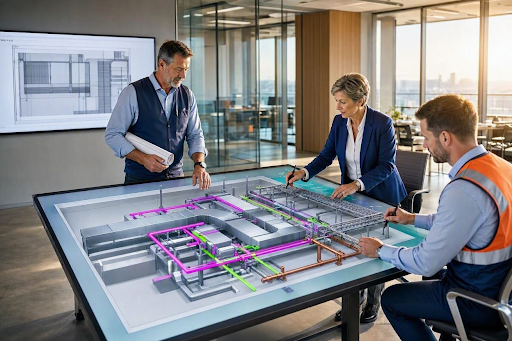

Prefabrication has quietly become the difference between a task that finishes on the timetable and one that bleeds time on the floor. Behind each clean spool and shop drawing sits a chain of choices that starts offevolved long before fabrication starts offevolved, selections rooted in how nicely trades plan, model, and communicate with one another. This article walks through how coordinated models evolve into fabrication-ready spools and shop drawings, and why that journey involves more than most teams comprehend. Along the way, we’ll look at where projects have a tendency to be triumphant, where they quietly fall apart, and what separates a clean handoff from a chaotic one.
Why Coordination Comes Before Fabrication
Coordination is where reliable MEP BIM Services earn their keep, given that every downstream selection depends on how cleanly trades sync their models before anything moves closer to fabrication. Nothing that leaves a fabrication store needs to be a surprise to the crew installing it; that is the complete premise of coordination, catching conflicts on a display screen rather than on a job site, weeks earlier than steel or copper is cut.
When mechanical, electrical, and plumbing trades sync early, downstream groups inherit clarity rather than chaos, and that readability contains all the manner through to the store ground. A venture that starts evolved with a shared, disciplined model hardly ever ends up scrambling to explain a mismatch on-site.
Clash Detection as a Starting Point
Running clash detection is not a checkbox workout. It’s the first actual check of whether trades are in reality speaking to each other or simply running in parallel. A duct that overlaps a sprinkler main on-screen is a five-minute repair; the identical conflict located on-site can cost a full day.
Aligning Trades on a Shared Model
Mechanical, electrical, and plumbing teams frequently construct in isolation, then merge and give up and hope for the best. Flipping that order building one shared federated model from day one means way fewer past-due surprises and some distance much less transform once fabrication is underway.
Setting Tolerances Early
Fabrication does not forgive vague dimensions. Teams that outline tolerances, hanger spacing, and get admission to clearances for the duration of design, in place of for the duration of store drawing evaluation, save themselves painful lower back-and-forth as soon as parts are already ordered.
Turning Models Into Manufacturing-Ready Data
Coordinated models don’t just prevent clashes; they set the stage for accurate Construction Estimation, so budgets reflect what’s simply going to be built in preference to a difficult bet. A version that looks super in a walkthrough isn’t routinely equipped for a fabrication shop.
There’s a translation step where design rationale turns into something a machine or a technician can virtually cut, bend, and collect, and skipping it’s miles where maximum fabrication delays quietly start.
Level of Development and Why It Matters
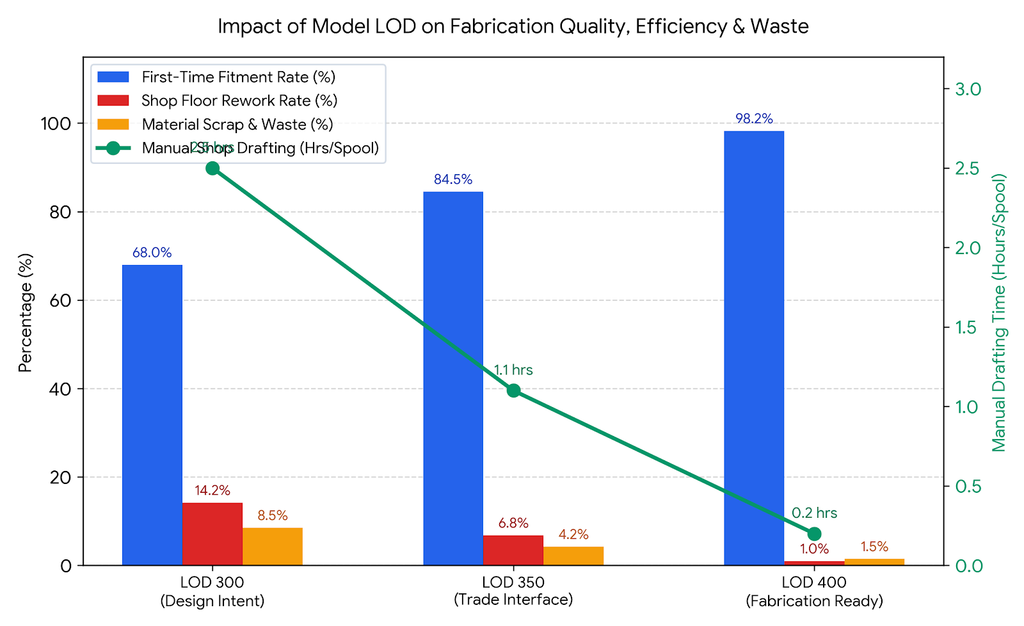
LOD four hundred is where fashions move from conceptual and begin being buildable. Every bend, hanger, and connection wishes to reflect what is going to physically exist, no longer simply what seems affordable in a rendering.
| Model LOD Level | Spatial Accuracy & Detail | Manual Shop Drafting (Hrs/Spool) | Rework Rate on Shop Floor (%) | Material Scrap & Waste (%) | First-Time Field Fitment Rate (%) |
| LOD 300 (Design Intent) | Approximate geometry / generic fittings | 2.5 Hours | 14.2% | 8.5% | 68.0% |
| LOD 350 (Trade Interface) | Hangar locations/clearance envelopes | 1.1 Hours | 6.8% | 4.2% | 84.5% |
| LOD 400 (Fabrication Ready) | Exact connections/bolt holes/weld gaps | 0.2 Hours | < 1.0% | < 1.5% | 98.2% |
Spool Breakdown Logic
Breaking a run into spools isn’t always arbitrary; it’s dictated by delivery length, weld access, and the way the piece will definitely attain its set-up factor. Getting this logic wrong means spools that look pleasant on paper may not fit through a stairwell or elevator shaft.
Material and Fabrication Standards
Every site has its own possibilities for fitting kinds, weld standards, and labeling conventions. A model that ignores those requirements forces manual rework on the fabrication stage, quietly erasing the time and financial savings prefabrication is purported to deliver.
The Shop Drawing Handoff
Even the software stack tells the tale: a coordinated BIM environment feeds cost and scheduling software the same way a professional Xactimate Estimator is based on precise measurements to charge a process effectively. This is the moment layout motive will become a bodily practiceset.
Get the handoff right, and the store ground actions rapidly. Get it incorrect, and confusion trickles all the way right down to the installation crew.
What Fabricators Actually Need
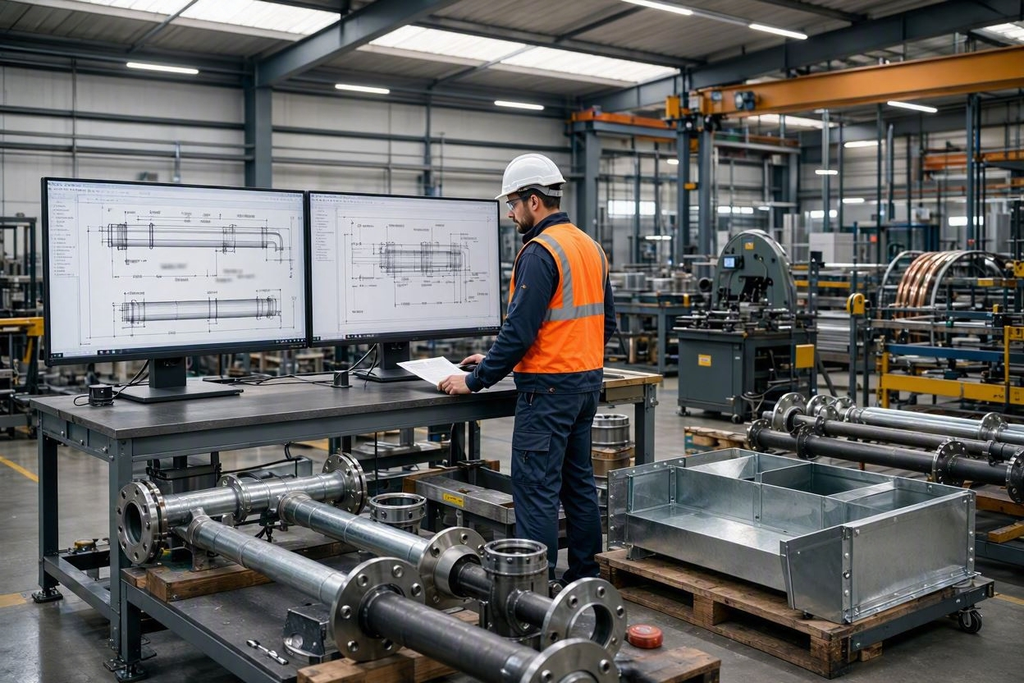
Fabricators do not want a quick rendering; they need precise dimensions, connection types, and sequencing notes. Drawings built with the shop floor in mind, not just the design assessment meeting, tend to move through manufacturing with far fewer questions.
Common Gaps Between Design and Shop Drawings
Design models now and then convey assumptions like idealized routing or standard fittings that do not live in contact with real-world constraints. Bridging that gap early, as opposed to leaving it for the fabricator to guess, keeps schedules intact.
Version Control and Change Tracking
A single missed revision can send an entire batch of spools to the scrap pile. Disciplined model management with clean trade logs tied to the coordinated model is what maintains every body constructing from the identical source of truth.
Benefits That Show Up on Site
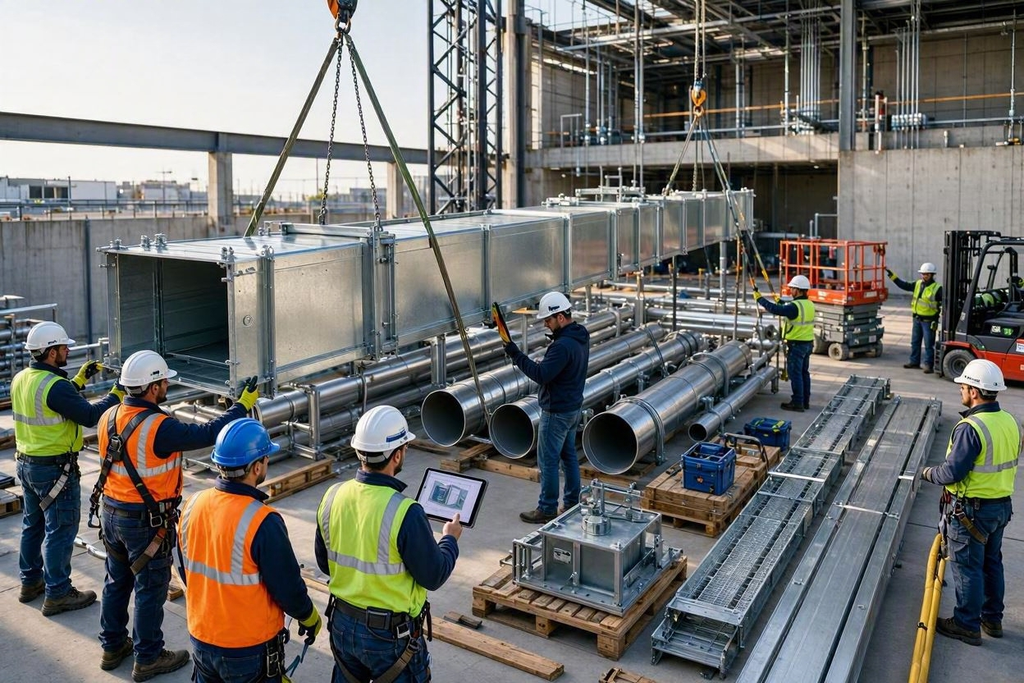
Once coordination and fabrication data are treated well, the payoff isn’t always theoretical; it shows up in measurable methods once crews are clearly on-website online. Teams that put money into this early tend to observe the difference within the first few days of setup, when trucks arrive with categorized assemblies in place of raw material ready to be figured out immediately.
That shift adjusts the rhythm of the whole task. Superintendents spend much less time chasing down clarifications, crews spend much less time in status rounds waiting on missing records, and the timetable stops soaking up the small delays that used to build up into massive ones. It’s much less about any single dramatic win and greater approximately dozens of small frustrations simply not going on anymore.
- Fewer installation surprises, when you consider that conflicts had been resolved digitally instead of observed mid-deploy
- Faster team productivity, because prefabricated assemblies arrive categorized, sequenced, and ready to grasp
- Tighter cost predictability, because fabrication quantities are pulled at once from the version in place of envisioned by eye
Where Teams Still Struggle
Even nicely-intentioned groups run into friction, and it is generally not because the generation fails; it’s because the manner around it breaks down someplace between design and the shop floor. Software can only do so much whilst the humans feeding it facts aren’t aligned on timing, duty, or how changes get communicated once a version is locked.
These gaps have a tendency to be small, in my opinion,n but compound quickly on a live task. A missed replace here, an assumption left unchallenged there, and unexpectedly a fabrication story built from information that does not suit fact. The restoration normally isn’t always extra generation; it is tighter accountability for who updates what, and when.
- Inconsistent LOD throughout trades, which forces a person downstream to fill in lacking elements manually
- Poor communication among design groups and fabrication shops, leading to drawings that technically match the version but now not the store’s actual workflow
- Change orders that update the three-D version, however,r never make it into the shop drawings, growing a silent mismatch that surfaces hardest during setup.
Final Thoughts
Prefabrication rewards teams that deal with coordination as a discipline, not a formality. The tasks that circulate fastest on-site are nearly continually the ones wherein the model, the shop drawings, and the fabrication ground were talking the same language from the very start. Getting that alignment proper isn’t glamorous painting; however, it is the quiet engine at the back of each spool that fits the first time it is lifted into location.
Also Read: How 3D Scanner 3D Printed Technology is Evolving with Handheld 3D Scanner Solutions
FAQs
1. What’s the difference between a coordinated version and a creation document?
A coordinated model resolves clashes and confirms spatial information throughout trades; a construction file communicates that resolved layout to human beings building or putting it in, often in 2D form.
2. Why does LOD count so much for prefabrication mainly?
Prefabrication depends on specific, buildable data. Anything below LOD 400 typically still incorporates placeholder geometry that isn’t precise enough for a fabrication shop to cut or gather from.
3. How do shop drawings vary from spool drawings?
Shop drawings cover the broader fabrication package, such as layout and connection information, while spool drawings zoom in on individual prefabricated segments, displaying exact cut lengths, fittings, and orientation.
4. Can prefabrication work without complete exchange coordination?
It’s feasible, but volatile. Without coordination, spools are built against assumptions rather than verified spatial data, which typically ends in subjective adjustments that undercut the time and financial savings prefabrication is supposed to provide.
5. Who commonly owns the handoff between the coordinated model and the fabrication shop?
It varies with the aid of mission, but typically a BIM coordinator or detailer manages that translation, ensuring the model’s intent survives the bounce into keep-equipped documentation.