The Architecture of Modern Digital Domination: Balancing Visual Intentionality with Technical Speed

The corporate internet landscape has completely evolved past basic online brochures. For a long time, an online presence required only that a company stand up a functional, responsive site listing its operating hours, service catalog, and physical location. If the platform stayed online and scaled roughly onto mobile devices, it was deemed a successful business asset.
Today, that passive approach is entirely obsolete. Consumers have been conditioned by premier digital spaces to expect instant interactions, minimal layouts, and fluid navigation paths. If your business infrastructure feels slow or functions like an outdated template, potential clients will abandon your ecosystem and look elsewhere. Securing true market share in a hyper-competitive landscape requires intentional digital engineering.
1. Visual Structuralism and the Power of Atmospheric UI
When a prospective client lands on a URL, their subconscious forms a lasting perspective on the brand’s authority within single fractions of a second. Cluttered interfaces, auto-playing multi-media elements, and aggressive promotional text create immediate cognitive fatigue. The trending design standard relies heavily on clean spatial layouts, high-end editorial formatting, and atmospheric dark modes.
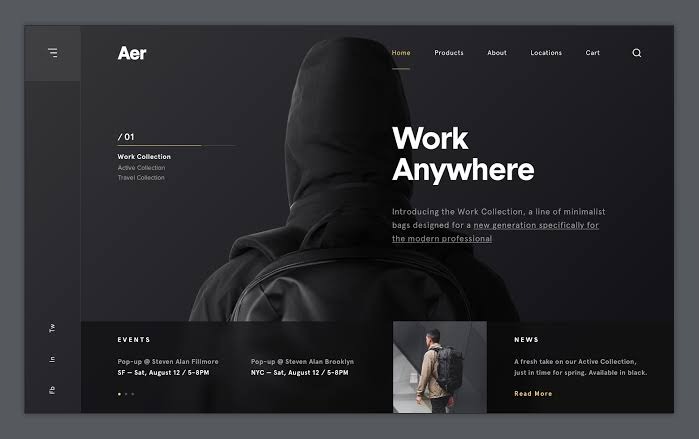
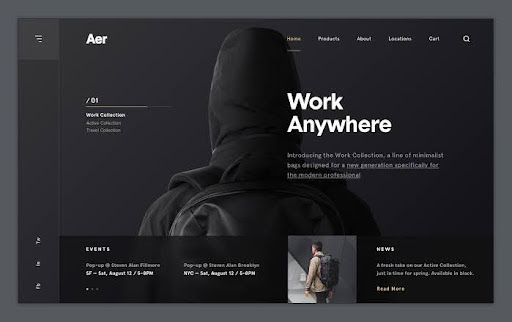
As displayed above, modern visual systems rely on spacious typography and high-contrast spacing rather than over-designed graphics. By organizing distinct brand concepts into clean geometric zones, users process data sequentially. Instead of hunting through traditional multi-tiered submenus, consumers can scan a clean interface and comprehend the core company value statement instantly.
2. Speed Engineering: The Invisible User Experience Metric
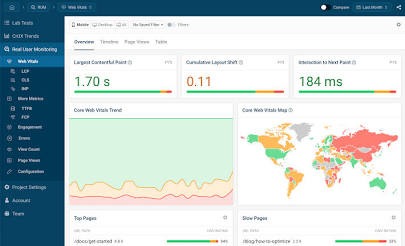
A beautiful interface cannot salvage a slow-loading website. Search engine indexing algorithms heavily prioritize site performance as a defining element for organic search visibility. Heavy frameworks, massive graphics files, and unoptimized server configurations push domains down search result rankings where they are rarely discovered.
[User Action] ──> [Server Response (TTFB)] ──> [First Contentful Paint] ──> [Interactive System Ready]
│ │
Target: < 200ms Target: < 2.5 Seconds
To satisfy these strict performance parameters, engineering teams avoid heavy pre-built templates. Instead, they rely on custom backend architectures, utilize modern file configurations like WebP or AVIF to drastically decrease file size, and implement smart lazy loading so elements process only as a visitor scrolls. This strict code optimization ensures pages render fast, maximizing retention.
3. Engineering for Seamless Adaptive Mobility
Mobile usability is no longer just a checkbox; it is the definitive foundation of modern consumer traffic. Mobile platforms generate more than half of global web interactions, making mobile-first engineering an absolute prerequisite for brand scaling.
An adaptive layout must reshape itself smoothly across all screens, from premium multi-window desktop displays down to tight smartphone screens. Touch targets must feature plenty of hit padding to eliminate user error, navigation systems should toggle effortlessly without creating layout shifts, and font sizes must scale dynamically to preserve reading comfort. When an interface delivers an impeccable mobile environment, user satisfaction increases and search engine visibility scales naturally.
4. Hyper-Local SEO Integration as a Brand Strategy
While large-scale marketing campaigns focus on broad, national audiences, regional companies scale by dominating localized search intent. When a prospective customer searches for an immediate, nearby solution, search engines prioritize highly optimized local businesses.
Securing these high-intent local opportunities requires deep, technical local SEO integration. This means implementing structured local schema data, optimizing core web performance for mobile connections, and designing custom regional landing hubs. When a brand combines top-tier visual aesthetics with high local search visibility, it captures valuable traffic exactly when consumers are ready to convert.
5. Merging Visionary Execution with Strategic Regional Expertise
Building an industry-leading digital presence requires a specialized combination of custom interface programming, conversion psychology, and localized search engine strategy. For companies striving to break away from the noise in growing regional economies, generic website builders cannot deliver the necessary performance, custom functionality, or tailored UX pipelines required to scale.
If your corporate objective is to secure an authoritative, market-leading position within a highly competitive commercial hub, partnering with an elite agency like Ankit Designs ensures your platform is engineered for long-term growth. Collaborating with a dedicated local expert ensures your site features clean code, responsive frameworks, and powerful conversion architectures built for your specific target audience. Professional development handles the technical heavy lifting, turning your website into an automated lead generator.
Also Read: Recovery Home Management Software Solutions: The 2026 Buyer’s Guide
Technical Audit Metrics for Enterprise Growth
To determine whether your current website infrastructure is helping or hurting your corporate expansion goals, evaluate your platform against these vital technical metrics:
| Optimization Vector | Targeted Level | Strategic Growth Value |
| Largest Contentful Paint (LCP) | Under 2.5 Seconds | Minimizes early bounce rates by rendering core structural layout items almost instantly. |
| Interaction to Next Paint (INP) | Under 200 Milliseconds | Provides a snappy, highly responsive feel when users interact with mobile navigation bars or forms. |
| Mobile Speed Score | 90+ on PageSpeed Insights | Directly impacts your visibility, credibility, and organic keyword rankings in search results. |
| Accessibility Grade | WCAG 2.2 AA Standard | Guarantees a fully inclusive interface for all individuals, including those utilizing screen readers. |
The Performance Factor: Your website is your most active brand representative, interacting with prospects 24 hours a day, 7 days a week. If it loads slowly, feels outdated, or behaves poorly on mobile devices, it is actively driving qualified business directly to your competitors.
The future of business growth belongs to organizations that treat their digital interfaces as critical capital assets. By stepping away from rigid templates and investing in fast, accessible, and hyper-localized custom design, you unlock maximum search authority and build a powerful foundation for scalable long-term growth.