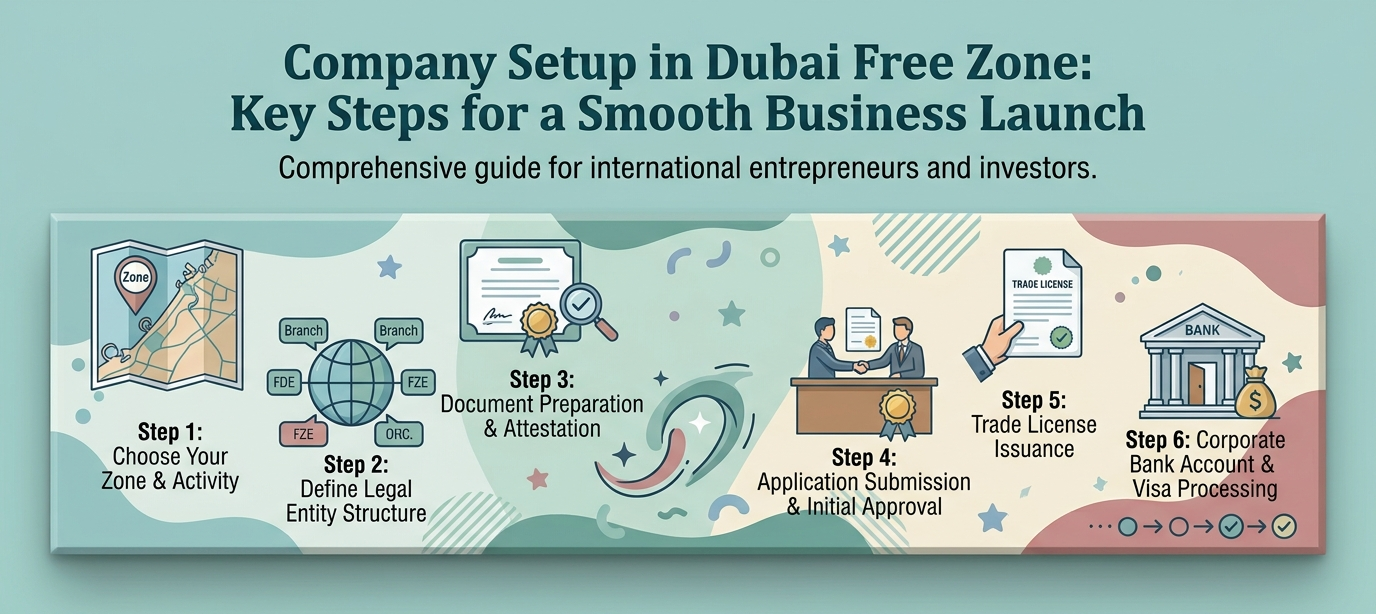

Dubai free zones attract entrepreneurs with a wide variety of business models, from professional and digital ventures to trading and internationally focused operations. However, establishing a company successfully requires more than selecting a location and completing an application. The decisions made during the early planning stage can affect operations, administration, and future expansion.
A carefully planned company setup in Dubai free zone should reflect the company’s commercial purpose. Founders need to consider what the business will do, where its customers are located, who will own and manage it, what resources it needs, and how those requirements could change over time.
Turn the Business Idea Into a Setup Plan
Entrepreneurs often begin with a strong commercial idea but without a detailed operating framework. Before starting incorporation, translate that idea into practical requirements.
Define the company’s primary offering, expected customers, revenue model, workforce, and day-to-day operations. These details create the foundation for more informed formation decisions.
Identify Your Non-Negotiable Requirements
Every business has certain requirements that cannot easily be compromised.
A company may need particular activities, sufficient capacity for employees, suitable workspace, or an arrangement compatible with its intended operations. Identify these essentials before comparing establishment options.
Doing so prevents secondary features from distracting founders from what genuinely matters.
Choose Business Activities With Care
The company’s activities should accurately represent its intended commercial operations.
Start with the activities expected to generate revenue immediately. Then consider closely related areas that realistically form part of the growth strategy.
When planning company setup in Dubai free zone, founders should avoid adding unrelated activities merely because they might become useful someday.
Write a Simple Activity Statement
Describe the business in two or three sentences.
If the proposed activities do not clearly correspond with that description, review the scope again. This simple test can reveal whether the setup accurately reflects the commercial plan.
Clarity at incorporation can make subsequent administration easier.
Evaluate the Free Zone Against Operations
A free zone should fit the business rather than forcing the business to fit the setup.
Entrepreneurs should examine activity compatibility, operational requirements, workspace options, staffing expectations, customer geography, and expansion plans.
Use Weighted Decision Criteria
Not every consideration has equal importance.
Founders can assign greater weight to essential operational requirements and less weight to convenience-based preferences. Comparing potential options using the same criteria encourages more objective decision-making.
The goal is long-term suitability rather than simply finding the quickest route to registration.
Clarify Ownership and Control
Ownership arrangements should be settled before formal documentation begins.
Where multiple shareholders participate, each person should understand their position and how important decisions will be made. Responsibilities for managing the company should also be established.
Create Clear Internal Authority
Decide who can approve important operational matters and who is responsible for maintaining corporate information.
Clear authority becomes particularly useful as the company expands and more people become involved in daily operations.
Good governance should begin during company setup in Dubai free zone rather than being introduced only after problems arise.
Prepare Documentation Before Submission
Incomplete or inconsistent information can interrupt an otherwise well-organized formation process.
Founders should prepare relevant identification details, ownership information, proposed company particulars, activity descriptions, and other supporting records applicable to their circumstances.
Perform a Quality Check
Before submitting documentation, review every important detail.
Check names, dates, addresses, identification information, and ownership particulars for consistency. Maintain organized copies of documents submitted during the process.
These records can become part of the company’s permanent corporate filing system.
Plan Workspace Around How People Work
Workspace should serve the operating model.
Consider whether employees need to work together regularly, whether customers will visit, and whether the business requires physical facilities for its activities.
A company with a small founding team may have limited initial needs, but those requirements can change quickly.
Forecast Headcount
Estimate employee numbers for the first, second, and third years.
The forecast does not need to be exact. Its purpose is to determine whether the initial operating arrangement has reasonable capacity for expected development.
This makes workspace planning more strategic.
Prepare the Business for Actual Operations
Successful company setup in Dubai free zone should include a plan for what happens after incorporation.
Founders need procedures for managing customer agreements, financial records, corporate documents, internal approvals, and employee information where relevant.
These systems can be simple during the early stages.
Build a First-Week Checklist
Identify the administrative tasks that need immediate attention once the company becomes operational.
Assign responsibility for each task rather than assuming the founders will manage everything informally.
Early organization can prevent administrative gaps from developing as commercial activity increases.
Create a System for Ongoing Responsibilities
Corporate administration does not stop after establishment.
Depending on the company’s circumstances, applicable renewals, records, filings, and other recurring responsibilities may require attention.
Founders should identify relevant requirements and track them centrally.
Use Advance Reminders
Important tasks should appear on a corporate calendar well before their deadlines.
Assign a responsible person and maintain documentation showing when each requirement has been addressed.
This creates an administrative system that can continue functioning even when team responsibilities change.
Test the Setup Against Growth Scenarios
Before finalizing the structure, imagine how the business might develop.
What happens if the company hires substantially more employees? What if another shareholder joins? What if a related commercial activity becomes important?
A good company setup in Dubai free zone should accommodate reasonable development without being unnecessarily complicated from the outset.
Review After Major Milestones
Corporate planning should continue after launch.
Review the setup when the company reaches important milestones, such as substantial workforce expansion, introduction of new activities, ownership changes, or entry into additional markets.
These reviews help keep the corporate framework aligned with business reality.
Avoid Formation Decisions Based on One Factor
No single consideration should automatically determine the entire setup.
Speed, convenience, workspace, or any other individual feature should be assessed alongside the broader commercial model.
A strong formation decision considers how all major elements work together.
Entrepreneurs who evaluate the complete operating picture are more likely to establish a structure capable of supporting sustainable development.
Also Read: etruesports iOS App – Features, Download & Full Guide
Conclusion
Establishing a business in a Dubai free zone is most effective when formation decisions begin with commercial requirements rather than administrative convenience.
Company setup in Dubai free zone should involve careful activity selection, structured comparison of options, clear ownership arrangements, accurate documentation, realistic workspace planning, and preparation for ongoing administration.
Founders who connect these decisions with future growth can build a more adaptable corporate foundation. Registration may establish the company legally, but thoughtful planning helps ensure the business is ready to operate, develop, and respond effectively as new opportunities emerge.