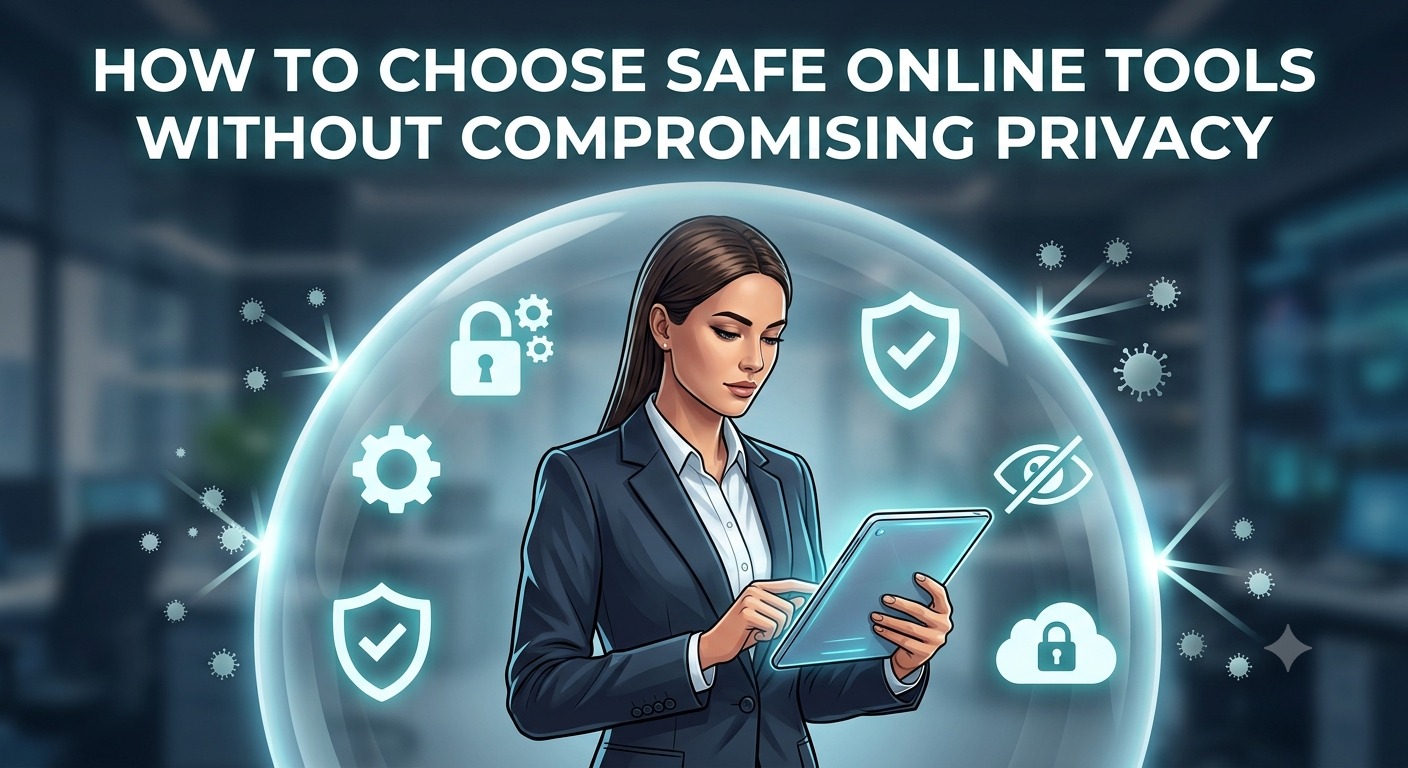

The convenience and ease of online tools have revolutionized everyday tasks. Being able to edit documents, install new software, and more, right from your web browser, has attracted many users to online tools. However, as the saying goes, ”don’t judge a book by its cover”. Not all online tools are safe. Some can collect personal information; you might even encounter harmful ads. As a user of a document editor, image compressor, cloud storage, or even an MP3 converter, you are at risk. Using an unknown online tool can be potentially harmful to your security and privacy.
The use of online tools doesn’t have to come at the cost of your privacy. Using a few tips, you can find safe online tools. The following guide will inform you on what safe online tools to use, so you can use online services with the benefit of being safe and not compromising the privacy of your personal information.
Why Online Privacy Matters
Your browser transmits data such as your IP address, browser type and version, operating system, and your approximate location, with every website visit. You can assume any documents you upload are saved to that website’s servers temporarily.
When you use a trusted online tool, your information is usually protected through secure connections and responsible privacy practices. However, unsafe websites may collect more data than necessary or fail to protect the information they receive.
Protecting your privacy helps you:
- Keep personal information secure
- Reduce the risk of identity theft
- Prevent unauthorized access to files
- Avoid malware and phishing attacks
- Browse the internet with greater confidence
Understanding these risks is the first step toward making smarter choices online.
What Makes an Online Tool Safe?
A good, reliable online tool cares about security and probably makes things easier for the user. However, it is always a good idea to take a moment and ensure a website is secure before using it.
These are the biggest indicators of a secure online tool.
Secure HTTPS Connection
One of the simplest things to look for is whether the site uses HTTPS instead of HTTP. HTTPS is a secure connection that encrypts the data sent between your browser and the website. You can usually tell by the padlock icon next to the website address.
While HTTPS doesn’t guarantee total safety, it’s an important first step.
Clear Privacy Policy
Reliable websites explain exactly how they collect, use, store, and protect your information. A privacy policy should clearly answer questions such as:
- What information is collected?
- Why is the information needed?
- Is the data shared with third parties?
- How long are uploaded files stored?
- Can users request file deletion?
If this information is missing, you should think carefully before using the service.
Also Read: BrandRank.AI Normalization Transformation Rules: The Complete 2026 Guide to Winning AI Visibility
Positive User Reviews
User reviews provide valuable information about the reputation of a website. Read reviews from trusted tech sites, review sites, and online communities.
Usually, a pattern of positive feedback indicates that users have had good experiences with the service.
Regular Website Maintenance
Secure sites are refreshed often. Updates may contain bug fixes, improved security, and better performance. A website that appears outdated or contains broken pages may not be well maintained.
Features to Look for Before Using an Online Tool
Selecting a secure tool includes more than checking the website address. Check the features below that can be helpful.
Easy-to-Use Interface
Professional sites have clean layouts that are easy to navigate. A cluttered interface, with pop-up ads, can hurt the overall user experience and sometimes suggest lower quality.
Limited Data Collection
Good online tools will only ask for the information that they need to do the job you asked them to do. If a website is asking for more personal information than necessary, be careful and find out why.
Automatic File Deletion
Many reputable file conversion and editing tools automatically delete uploaded files after processing. This helps limit the possibility that your files sit on external servers longer than necessary.
No Forced Account Creation
Many trusted services enable users to perform basic functions without registering. Less personal information to give.
Transparent Contact Information
You’ll often see contact information, customer support, or FAQs on trustworthy websites. Such transparency makes the users more confident.
Simple Tips to Protect Your Privacy
Even when using reputable websites, following good online habits can improve your security.
Use Official Websites
Always check that you are on the official site. Fake copies often mimic popular services in an effort to trick users into downloading malicious software or sharing personal information.
Bookmark trusted sites to help you get back to the right one easily.
Avoid Uploading Sensitive Files
Think twice before uploading a document containing financial records, passwords, personal identification, or confidential business information to an online service.
Use offline software for highly sensitive files whenever possible.
Keep Your Browser Updated
Browsers are updated regularly, to guard against newly discovered security threats. Older browsers may have security holes that hackers can exploit.
Install Reliable Antivirus Software
Security software can identify malicious downloads, suspicious websites and harmful files before they become a problem.
Use Strong Passwords
If an online service requires you to sign up for an account, use a strong password that includes a mix of letters, numbers, and special characters. Don’t use the same password on multiple sites.
Warning Signs You Should Never Ignore
Unsafe websites often display warning signs that users can recognize with a little attention.
Too Many Advertisements
Some sites have so many ads that visitors find it hard to get around. Too many pop-ups can lead to unsafe pages or accidental downloads.
Forced Downloads
Beware of a website that automatically downloads software you didn’t want. Most reputable online tools don’t make you download and install additional apps.
Requests for Unnecessary Information
If a basic file converter is asking for your home address, phone number, or financial information, you should have red flags.
Missing Privacy Policy
A website that does not explain how it handles user information may not be committed to protecting privacy.
Browser Security Warnings
Modern browsers display warnings when they detect unsafe websites. Never ignore these alerts.
How to Compare Online Tools
When choosing between multiple online tools, compare several important factors instead of selecting the first result you see.
Security
Look for HTTPS encryption, secure file handling, and clear privacy practices.
Ease of Use
Choose a platform with simple navigation and clear instructions.
Reputation
Read reviews from real users and trusted technology sources.
Speed
A good online tool should complete tasks efficiently without sacrificing security.
Compatibility
The service should work well across different browsers, operating systems, and devices.
Making a careful comparison helps you select a tool that meets both your privacy and performance needs.
Responsible Use of Online Conversion Tools
Today, online conversion tools rank among the most commonly used web services. Their broad appeal stems from the ability to convert a wide variety of files, such as documents, images, audio, and videos.
Flvto is a conversion tool that streamlines the process of downloading online videos and saving them in a variety of supported formats. Downloader services are very powerful and can facilitate a lot of different activities, so it is important to make sure you have the right to download or convert the content and observe the copyright and terms of service of the Posting platforms.
This tool and others like it are more effective and safer for internet users in general when they are used properly.
Best Practices for Safe Browsing
Developing good browsing habits reduces the risk of encountering unsafe websites.
Here are some useful practices:
- Visit only trusted websites.
- Verify website addresses before entering personal information.
- Avoid clicking suspicious advertisements.
- Download files only from reliable sources.
- Clear your browser cache regularly.
- Enable automatic browser updates.
- Use two-factor authentication whenever available.
- Log out after using shared computers.
- Regularly review your browser extensions and remove unnecessary ones.
- Back up important files in case of unexpected issues.
Small habits like these provide long-term protection.
Common Mistakes Users Make
Many privacy problems happen because users overlook basic safety practices.
Some common mistakes include:
Clicking the First Search Result
Not every search result leads to an official website. Some may imitate legitimate services.
Ignoring Browser Warnings
Security warnings exist for a reason. If your browser says a website may be unsafe, avoid proceeding unless you fully trust the source.
Reusing Passwords
Using the same password everywhere increases the risk of multiple accounts being compromised if one password is leaked.
Sharing Too Much Information
Only provide personal information when it is genuinely required.
Forgetting to Delete Temporary Files
After downloading or editing files, remove temporary copies that you no longer need, especially on public or shared devices.
Also Read: How to Get Rid of Tech Neck: The Complete Fix for Remote Workers, Gamers & Screen-Heavy Jobs
Frequently Asked Questions
Why should I choose trusted online tools?
Trusted tools are more likely to keep your personal information safe, use secure connections and provide reliable service.
Is HTTPS enough to guarantee safety?
No, HTTPS secures the connection, but you should also check the website’s reputation, privacy policy, and user reviews.
Should I upload confidential documents?
Don’t upload anything too sensitive unless you really trust the service and understand how your files are handled.
How can I identify fake websites?
Carefully check the website address, read user reviews, verify the privacy policy, and avoid suspicious ads or unexpected downloads.
What should I do if a website seems unsafe?
If you’re on the website, get out immediately. Don’t download anything and run updated antivirus software on your device if you need to.
Conclusion
Using the internet safely doesn’t have to be overly complicated. Doing some research about a website can save your personal information. Focus on sites that have secure connections that start with HTTPS, have strong privacy policies, have good user feedback, have files that are automatically deleted, and have safe online practices.
Set some online safety practices such as updating your browser frequently, creating strong passwords, not visiting insecure sites, and most importantly, not sharing sensitive personal information. With these practices, you can use online tools while keeping your information safe.













[…] Also Read: How to Choose Safe Online Tools Without Compromising Privacy […]