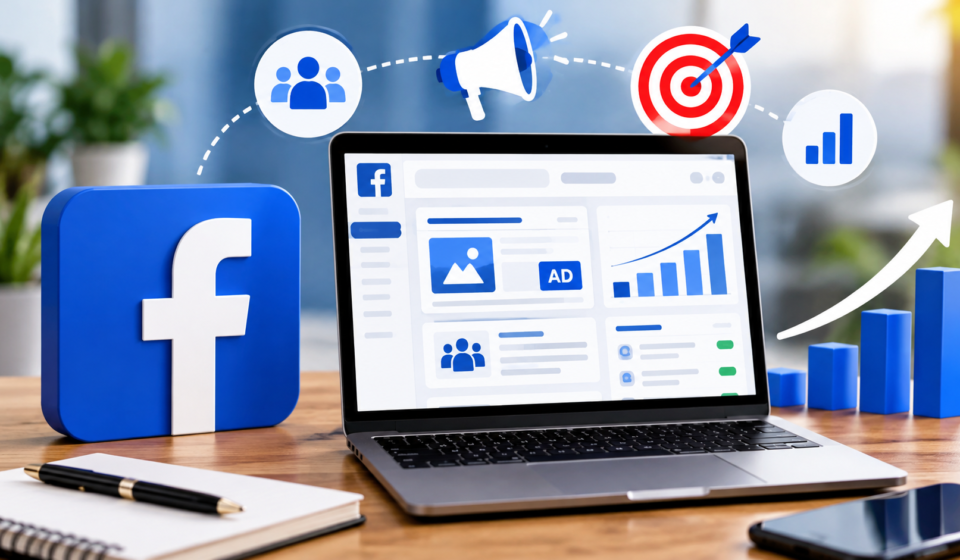

Running Facebook ads without a strategy might turn your advertising into a game of guessing. You can gain clicks or impressions with a campaign, but that doesn’t necessarily imply you’re reaching the correct people, or that they’re progressing towards a purchase.
A robust Facebook Ads plan provides your campaign with clear direction. It helps you select who to target, what message to employ, which ad type fits your aim, and how to monitor if the campaign is working. Your campaign that focusses on specific business objectives and audience demands, rather than just boosting a post and hope for the best.
In this tutorial, we’ll cover the major components of an efficient Facebook Ads strategy including audience research, campaign setup, budgeting, creative testing, and performance tracking. In creating paid social media marketing, businesses working with Utah Boost can also leverage these strategies.
What Is a Facebook Ads Strategy?
You have probably tried throwing spaghetti against the wall to see which one will stick with Facebook ads. This is the fastest way of wasting your money on ineffective advertising campaigns utahboost.
A current Facebook ads campaign with a board emphasis is broad with Campaign Budget Optimization (CBO) and creative led testing, not hyper-segmented interest groups.
Strategy vs. Tactics
- Strategy: The big picture of your long-term goals and how your marketing initiatives are going.
- Campaign: The highest level of structure where you set your primary goal, e.g. lead generation, conversions, etc.
- Ad set: This is the targeting layer where you specify your audience, budget, timetable, and ad placements.
- Ad/creative: The layer that users engage with. Contains the images, videos, headlines, and content.
What a Good Strategy Should Answer
- Who are we trying to reach? Defines your ideal customer personas and target demographic parameters.
- What action do we want? Specifies the primary conversion goal, like purchases, sign-ups, or app installs.
- What message will we use? Establishes the core value of proposition and creative angles that resonate with the audience.
- Where will people go after clicking? Identifies the optimal landing page or destination URL designed for conversions.
- How will we measure success? Determines the key performance indicators (KPIs) like ROAS, CPA, or CTR to track.
Why Do You Need a Facebook Ads Strategy?
We need a Facebook ads strategy because it brings us the content and as well as the client and grows our business worldwide. In the below we will discuss why we need strategy.
- Better budget control: Stop wasting money on failed ads and limit daily spending.
- Clearer audience targeting: Reach the exact people who want your product.
- Consistent messaging: Deliver one clear and strong brand story everywhere.
- Better testing: Compare different images and text safely to find winners.
- Measurable outcomes: Track your exact profit and return on investment clearly.
- Easier optimization: Improve weak campaigns quickly using real data.
What Happens When You Run Ads Without Strategy?
- Without strategy: You spend cash blindly, target the wrong crowd, guess what works, and get zero sales.
- With strategy: You invest money with purpose, reach active buyers, and grow your business predictably.
How to Build a Facebook Ads Strategy Step by Step
A good Facebook Ad marketing strategy involves more than merely creating an advertisement and selecting the target market – each step must flow seamlessly into the next, from defining the objective to evaluating its success even after clicking on it.
If you’re interested in building an organized and measurable Facebook Ads campaign that corresponds to your business goals, please follow these steps:
1. Start With a Clear Business Objective
The first thing is to decide what you want to achieve with your Facebook Ads campaign. You might want to raise awareness, drive traffic to your site, create leads, increase sales, or spark interaction.
A service business may seek more leads, for example, while an e-commerce shop may focus on sales. Let your goal be led by the advertising target and the KPI to measure performance.
Think about the process like:
Advertising purpose → Business goal → KPI
This helps keep the campaign on a specific business result rather than just counting clicks or impressions.
2. Know your audience
After deciding on your objective, consider the people that will be most inclined towards adopting the intended behavior. Consider aspects like geography, your customers, what they want and need, and how they buy their products.
Your target market could also consist of people who are already aware of your business; existing customers, people who visit your site, or your content consumers. Depending on the marketing, Custom Audiences and Lookalike Audiences can also be helpful.
But audience research has to go beyond the identification of a list of interests. Ask a more useful question: Who is most likely to perform the action I desire from this ad?
3. Mapping Customer Journey
Not everyone that sees your Facebook ad is ready to become a customer. Consider where individuals are in their relationship with your business and adapt the message accordingly.
Cold: These people may not know your biz yet. Focus on problems, products, services, or brands.
Warm: They know about your business already. Offer them for more information, useful content or a cause to look at your offer.
Hot: These folks seem to have more intent. Be explicit about the next step you want them to take, whether it’s getting a quote, organizing a consultation, or making a purchase.
The same message does not have to connect with everyone. Different motives to continue forward are often needed by people at different times.
4. Select the Right Offer Before Creating the Ad
It is important to determine the response that you are going to elicit from the audience before creating the ad. The most targeted advertising strategy will still fail if the offer provided to the audience is not motivated for the consumers.
The offer can be in the form of consultation, demo, quotation, discount, downloadable content, or product promotion, depending on the kind of marketing campaign and business.
The offer should be consistent with the stage of the buyer’s journey. Someone finding a firm may need valuable information first, but someone currently researching possibilities may be ready for a price or consultation.
5. Select the Right Ad Format and Creative
The ad format should support the message and not be selected because it is popular. An image can express a basic product or service message, and video can be beneficial for demonstrations, instruction, or narrative. Carousel advertising allows you to show off several items, features, or concepts.
You also need to determine where the ad is going to be placed. The arrangement for creative built for a feed may differ from vertical content made for Stories or Reels.
Do not use one creative everywhere. Consider the audience, message, and placement when producing each variation.
6. Make the Campaign According to the Goal
Once you have your goal, audience, offer and creative direction, you’re ready to set up the campaign in Meta Ads Manager. The structure of a Facebook advertising campaign is comprised of three primary levels: Campaign → Ad Set → Ad.
The Campaign sets the general objective. The Ad Set makes delivery options including audience, placements, and budget settings based on the campaign configuration. The Ad is the actual material visitors view – image or video, copy, headline and call to action.
Knowing these levels helps you sort the tests and know where you need to make improvements.
7. Set a Budget You Can Actually Experiment With
No single daily budget will work for every firm. Your budget should align with the campaign goal, audience, offer, and how much your organization can really invest in testing.
Decide if the campaign needs a daily or lifetime budget and invest in adequate resources to collect good performance data. Don’t modify too much too soon based on limited outcomes.
The goal isn’t just to spend more time. It’s about building a testing budget that gives you enough knowledge to make smarter judgements.
8. Make a Landing Page that Matches the Ad
Your Facebook ad and landing page should be one experience. An example would be if the ad was promoting a free consultation, then the landing page should clearly state what the consultation is and how to ask for it.
Picture the way as:
Ad message → Landing page → Call to action → Conversion activity
The core message should be the same; the next step should be obvious, and there should be no diversions. Even the best ad can lose its punch if a visitor arrives to a page that is not what the ad promised.
9. Set Up and Test Tracking Before Scaling
Before you start spending more on advertising, be sure that you can measure the actions that matter to your organization. Depending on the campaign, this may contain conversion tracking, events, attribution, lead tracking, and CRM or offline outcomes if relevant.
Tracking helps you understand what occurs after a person engages with an ad. Clicks may tell you people are visiting your website, for example, but a lead-generation campaign may need to monitor if those visitors become qualified leads.
When tracking is operating well, analyze the data to evaluate your audiences, offers, creatives, and campaign setup. This gives you a better basis for determining what to test next and where additional cash could be justified.
How to Test Facebook Ads Without Wasting Budget
Testing does not mean launching several ads and spending money on all of them at once. A better approach is to test specific elements, compare the results, and use what you learn to improve the next version.
What Can You Test?
There are several parts of a Facebook ad that can affect performance, including:
- Creative: Test different images, videos, or designs.
- Hook: Try different opening lines to see what gets attention.
- Copy: Compare short, direct copy with more detailed messaging.
- CTA: Test actions such as “Learn More,” “Shop Now,” or “Get Started.”
- Offer: Compare different offers, benefits, or incentives.
- Audience: Test relevant audience groups to identify who responds best.
- Placement: Compare where the ad appears, such as Facebook Feed, Instagram Feed, or Stories.
Change One Major Variable at a Time
Do not attempt to vary all elements of an advertisement simultaneously. When you alter the creative element, target audience, copy, and offer at the same time, there is a chance that you will get improved or reduced performance and not know what caused the change. This makes it much harder to conclude your test ads.
Don’t Judge a Campaign from One Metric
Just because there is a lower cost per click doesn’t always mean that you have succeeded with your advertising. You should look at some other factors, including the number of clicks, CTR, conversion rate, cost per conversion, and overall campaign profitability. In this way, you will have a clear idea about the performance of your campaign and can continue with your analysis of Facebook Ads.
Which is the Best Facebook Ads Indicator?
There is no one best indicator for all Facebook Ads campaigns. It all depends on the goal you pursue. In a lead generation campaign, you may want to pay attention to CPL and the quality of leads generated. In an ecommerce campaign, CPA, conversion rate, and ROAS should be of primary concern.
| Metric | What It Tells You |
| CTR (Click-Through Rate) | Shows how often people click after seeing your ad. |
| CPC (Cost Per Click) | Shows how much you pay, on average, for each click. |
| CPL (Cost Per Lead) | Shows the average cost of generating a lead. |
| Conversion Rate | Shows how effectively clicks turn into a desired action. |
| CPA (Cost Per Acquisition) | Shows how much it costs to acquire a customer or conversion. |
| ROAS (Return on Ad Spend) | Shows how much revenue you generate for the money spent on ads. |
| Lead Quality | Shows whether your leads are relevant and likely to become customers. |
What Is the Most Important Facebook Ads Metric?
There is no single metric that is most important for every Facebook Ads campaign. The right metric depends on your goal. A lead-generation campaign may focus on CPL and lead quality, while an ecommerce campaign may prioritize CPA, conversion rate, and ROAS. For awareness campaigns, reach and engagement may matter more.
How to Optimize a Facebook Ads Campaign
Identify specific metric challenges to enhance your Facebook Ads campaign effectively.
Low CTR
- Symptom: The user sees your ad in the news feed but scrolls past without clicking.
- Solution: Analyze your creativity and message. The visual, headline, or body text is not engaging enough. Consider trying more aggressive imagery, short videos and strong emotional appeals.
High Clicks, Low Conversion
- Symptom: Your users click on the ad’s links readily, but they abandon your website quickly.
- Solution: Look at your landing page, the offer and tracking mechanisms. Confirm that your pixel fires properly for the desired events. Make sure your page loads quickly, delivers the promise of the ad, and drives an irresistible call-to-action.
Bad Leads
- Symptom: Submissions to your form go up instantly, but you have very few sales or leads who will eventually purchase something.
- Solution: Check your targeting, your message and the criteria of qualification. Make your ad text clearer as to the pricing or other terms of the offer. Add qualifying questions on your lead forms.
Increasing Cost of Acquisition/Result
- Symptom: The cost of customer acquisition or conversion goes up every day.
- Solution: Examine your creative fatigue, exhaustion of your audience, the value of your offer
Common Facebook Ads Strategy Mistakes to Avoid
Even a well-resourced Facebook Ads campaign can fail because the plan is not clear. There are some mistakes that should be avoided in order to maximize the effectiveness of the budget.
1. Boosting Posts Without a Goal
Boosting a post simply to get more views or engagement does not create a complete advertising strategy. Start with a clear business goal, such as generating leads, driving sales, or increasing awareness.
2. Targeting Everyone
A broad audience is not always a better audience. Define who is most likely to need your product or service instead of trying to reach everyone.
3. Changing Campaigns Too Frequently
Constant changes make it harder to understand what is actually working. Give tests enough time to produce useful data before making major adjustments.
4. Using the Same Creative for Every Audience
Different audiences may respond to different messages, visuals, or offers. Adapt your creative to the people you are trying to reach.
5. Ignoring the Landing Page
A strong ad cannot compensate for a confusing or irrelevant landing page. Keep the message and CTA consistent from the ad to the next step.
6. Measuring Clicks Instead of Business Outcomes
Clicks matter, but they do not always equal revenue or qualified leads. Track metrics that reflect your actual business goals.
7. Scaling Too Early
Do not increase spending simply because one ad performs well for a short period. First, identify a result that can be tested and repeated consistently.
Facebook Ads Strategy for Different Business Types
Facebook Ads strategy business ke goal aur customer journey ke hisaab se change hoti hai.
| Business Type | Strategy Focus |
| Local business | Local targeting + leads |
| Ecommerce | Products + sales |
| B2B | Qualified leads |
| Professional services | Trust + consultations |
Conclusion
A successful Facebook Ads strategy connects your goal, audience, offer, creative, budget, landing page, and tracking. Instead of simply running ads, businesses can use campaign data to understand what works and make informed improvements. Facebook Ads can also become part of a broader social media marketing strategy for businesses looking to reach and engage their target customers.
Frequently Asked Questions
What is a Facebook Ads strategy?
It is a plan for reaching the right audience, promoting the right offer, and measuring results through Facebook advertising.
How do I create a Facebook Ads strategy?
Define your goal, identify your audience, choose an offer, create your ads, set up a budget, track results, and optimize the campaign.
How much should a small business spend on Facebook Ads?
There is no fixed amount. The budget should depend on the business goal, audience, offer, and available resources.
What is the best audience for Facebook Ads?
The right audience depends on your business and campaign goals. It may include local customers, website visitors, existing customers, or engaged users.
How do I know if my Facebook Ads are working?
Track metrics such as CTR, cost per lead, conversions, CPA, ROAS, and lead quality based on your campaign objective.