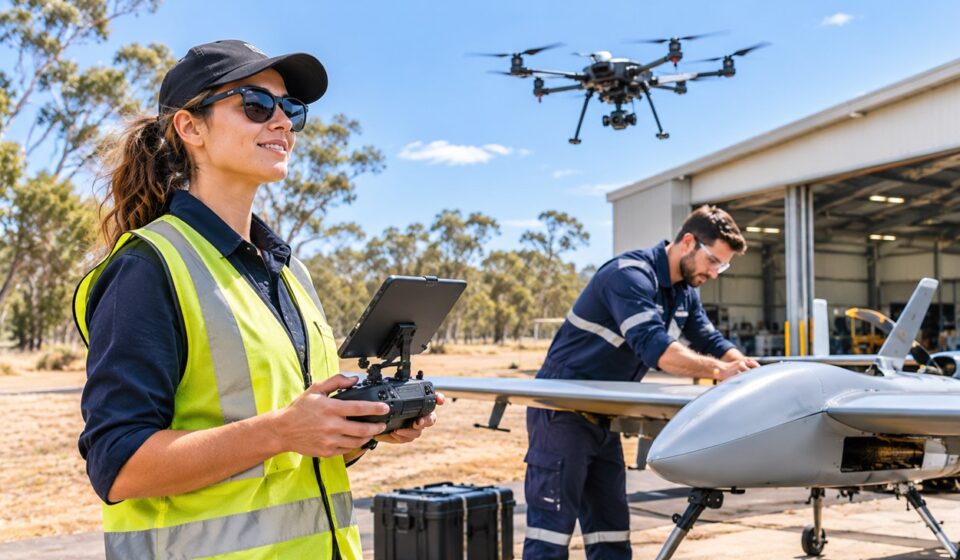

Go back a couple of years and seeing a drone fly overhead felt like a new and exciting sight. Today drones do a lot more. They fly over power lines to check them over, over farms to map fields, over building sites to watch progress, and even over emergency scenes to help firefighters.
Drones also fly to capture moments from wedding videos to big movie sets. As drones keep improving, the jobs that involve drones are also growing. If you have ever wondered whether working with drones could become a career, here is a clear look at what is possible.
Why the Industry Is Growing
Drones handle messy and risky tasks faster and often safer than humans can. Rather than sending a worker up a tower, a pilot can check it from the ground. Rather than walking through a huge paddock, a farmer can look at aerial pictures in just a few minutes.
Australia’s big size and different types of land make these benefits very useful. Mining, farming, electricity companies, building projects, and checking the environment all have areas to cover and good reasons to use pictures from the air.
Roles You Might Not Expect
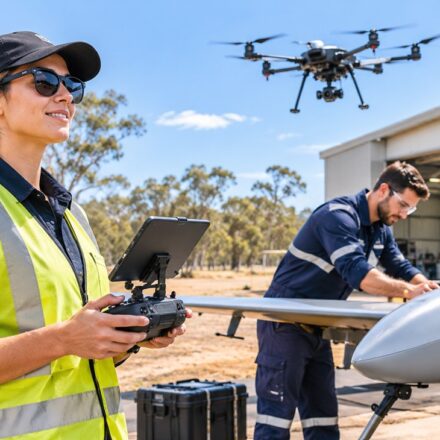
Most people imagine a pilot, and that is definitely one option. But the field is much wider than that. There are different roles available such as:
- Remote pilots who do inspections, create maps, take pictures, and help with farming
- Data analysts who look at pictures, 3D models, and sensor data
- Maintenance technicians who fix and adjust the machines
- Operations and safety managers who plan flights and handle risks
- Trainers and evaluators who teach new pilots how to fly
- Specialists in software, engineering, and following the relevant codes
This wide range of jobs means you don’t have to be the one flying the machine to work in this area.
Licences, Training, and Rules
Commercial drone work in Australia is regulated by the Civil Aviation Safety Authority (CASA). Depending on the aircraft’s weight and the type of operation, you may need a remote pilot licence and an operator accreditation. Requirements change, so always check CASA’s current guidance rather than relying on older advice.
Training providers and operators such as Global Drone Solutions are among the organisations people explore when looking for structured courses or industry exposure. Compare options on content, practical flight time, and how well they prepare you for the licence you need.
Skills That Make You Stand Out
Technical flying ability is only part of the picture. Employers tend to value people who can:
- Interpret data and turn it into useful reports
- Communicate clearly with clients who aren’t technical
- Follow safety procedures and think through risk
- Adapt as new equipment and software appear
Experience in a related field, such as surveying, agriculture, construction, or film, can give you an edge because you understand what the client actually needs from the footage.
Building Experience
Start small. Practise in safe, legal areas, log your flight hours, and build a portfolio of projects. Volunteer for local community mapping or photography work. Join industry groups, attend events, and talk to operators about how they got started.
Many people begin part-time or freelance before moving into a full-time role. That’s a sensible approach, since the industry is still developing and demand can vary by region and sector.
Keeping Realistic Expectations
Like any growing field, uncrewed aviation has its uncertainties. Rules keep changing, competition can be tough in some areas, and early income might not always be steady. But there’s still a need for data, and automation seems to keep growing.
If you like technology, working outside, and solving real-world problems, this is a field to look into. Learn the rules, keep building your skills, and stay curious. The sky, as the saying goes, isn’t the limit. It’s the workplace.