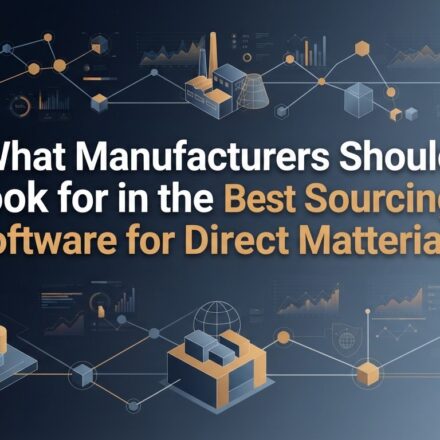


Businesses require reliable sourcing tools to properly manage material costs, supplier management and production schedules. This article will discuss the benefits of sourcing software in simplifying procurement, increasing supplier visibility and aiding in smarter purchasing decisions. It includes key functionality, supplier assessment, cost awareness, automation, integrations, and scalability parameters to enable manufacturers to select the right solution for their operational needs and ensure long-term procurement efficiency.
What Is Direct Material Sourcing?
Direct material sourcing refers to the process of buying raw materials, components and supplies that will be used in manufacturing finished products. They have a direct impact on production costs, product quality, inventory availability and delivery schedules.
Manufacturers may deal with a number of suppliers, price changes, orders, and different production needs. In the absence of centralised information, procurement teams can find it difficult to compare suppliers, find cost-saving opportunities and avoid material shortages.
The best sourcing software can assist with this by consolidating supplier data, sourcing activities and sourcing decisions into a single source.
Why Manufacturers Need Sourcing Software:
Finding suppliers that offer competitive prices is one part of the manufacturing procurement process. Evaluating quality, delivery reliability, purchasing terms, compliance, as well as supplier performance over time, will be required at a team level.
A sourcing platform can help to streamline these roles by automating repetitive tasks, ensuring better communication and offering real-time insights into procurement activities. It also enables manufacturers to base decisions on reliable purchasing data, rather than using a patchwork of spreadsheets and manual records.
The key benefits for procurement teams are a reduction of administrative burden, early detection of supplier issues, and better coordination between procurement, production and finance.
Key Features to Look for in the Best Sourcing Software:
The right sourcing software should offer supplier management, automated RFQs, real-time cost analysis, procurement tracking, risk assessment, and seamless integration with existing manufacturing systems to improve purchasing efficiency and supplier visibility.
Supplier Management and Comparison:
Some of the most critical skills manufacturers need to assess when looking at suppliers are their supplier management capabilities. This software should provide teams with the ability to keep supplier profiles, monitor their performance, to be able to compare quotations and organise key purchasing details.
In direct material sourcing, manufacturers have to do more than just consider the suppliers’ prices. Factors that affect supplier selection include delivery time, product quality, payment conditions, certifications, and reliability.
The best sourcing software should make these comparisons much easier, as it will have the supplier information readily available and organized.
RFQ and Procurement Automation:
Request for quotation (RFQ) management is a method of gathering quotes and terms from several suppliers. Sourcing software can replace the tedious task of emailing, and spreadsheets of quotes and supplier responses.
Search for automated workflows that can help with the approval workflow, purchase requisitions, supplier communication, and purchase order management. These features minimize repetitive admin tasks and speed up purchasing teams’ response to production needs.
Cost Analysis and Procurement Visibility:
Manufacturers should have a clear picture of material costs, supplier pricing and purchasing trends. A sourcing platform should offer reporting features to help pinpoint price fluctuations, spending patterns and potential savings.
The best sourcing software should also enable sourcing teams to assess the overall cost of purchasing the item instead of just the unit cost. Transportation, payback terms, quality issues, and the reliability of the suppliers can have a profound impact on the end cost of the materials.
How Sourcing Software Helps Manage Supplier Risks:
When suppliers are disrupted, it can impact production timeline and customer commitments, as well as inventory levels. Suppliers should seek supplier-specific tools to aid supplier performance management, risk identification, and maintain alternative supplier strategies.
A robust platform should provide the necessary documentation, tracking, compliance and communication records with suppliers. These features can assist procurement teams in their decision-making process when suppliers encounter delays, price variations, or quality issues.
Supplier visibility is especially significant for manufacturers dealing with more complex direct material sourcing, where the ability for a component to be sourced could have a direct impact on production continuity.
Integration With Existing Manufacturing Systems:
Any software solution that is sourced should be compatible with your existing systems. Seamless integration with other systems such as ERP, inventory, accounting, and production planning can minimize data duplication and ensure data accuracy.
The best sourcing software will have flexible integration abilities that permit procurement details to flow throughout departments. For instance, the purchasing team should be able to see material requirements from the stock level and the foreseen production plans.
Look at the following questions before choosing a platform to make sure it works with your current systems and that installation will not require extra technology.
How to Choose the Best Sourcing Software for Your Manufacturing Business:
The first step is to determine the issues you are facing in your procurement. Identify the need for improved supplier comparisons, automated RFQs, cost-reporting, risk management and/or purchasing visibility.
Then, assess software for usability, scalability, implementation needs, and support. See a demonstration and experience how it works for authentic buying/selling processes, supplier quotes, approval, reporting etc.
The best sourcing software should meet the needs of your existing business and be scalable to accommodate expansion. Don’t choose a platform just for the features it offers. Think about how your procurement team will use it and if it is aiding in improving measurable business outcomes.
Conclusion:
Selecting the appropriate sourcing platform can enable manufacturers to enhance supplier management, manage procurement costs and ensure consistent production operations. Best sourcing software delivers supplier visibility, purchasing automation, cost analysis, risk management and system integration in one functional solution.
Manufacturers can compare the capabilities to their operational needs, enhance supplier relationships, and optimize procurement efficiency by making informed decisions based on this evaluation.