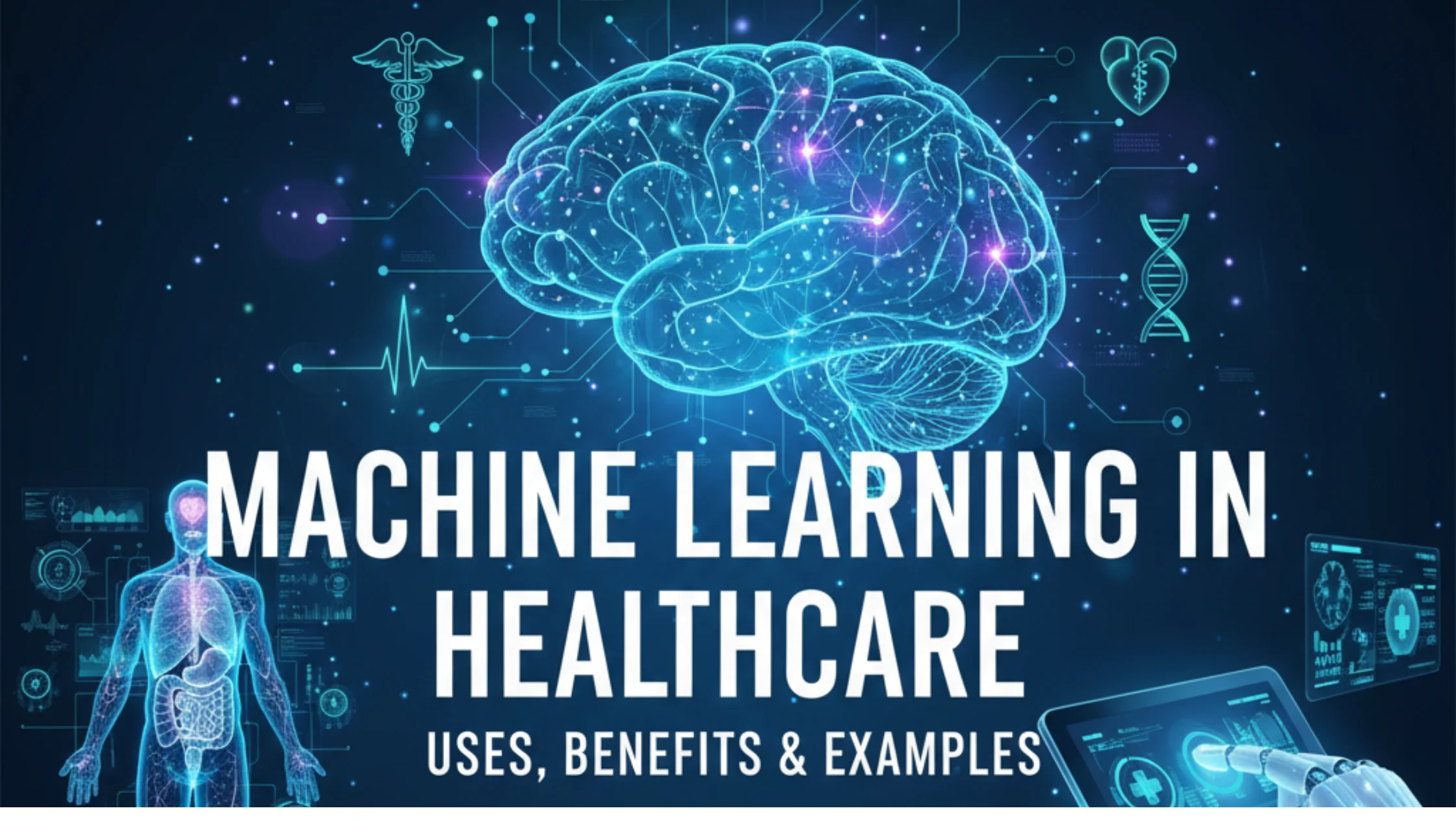

Machine learning in healthcare is changing how the US medical system diagnoses diseases, predicts risks, and improves patient outcomes. As providers face rising costs and staffing gaps, machine learning and healthcare innovations offer real solutions. This guide breaks down what ML is, how it works, and the most powerful applications already reshaping care today.
What Is Machine Learning in Healthcare?
Machine learning in healthcare uses data-trained algorithms to improve diagnosis, treatment planning, risk prediction, and hospital operations. It helps doctors detect diseases earlier, personalize care, reduce errors, and streamline workflows.
This approach is becoming essential across the US healthcare system, where efficiency, accuracy, and early detection are top priorities.
How Machine Learning Works in Healthcare
Machine learning models learn patterns from large volumes of healthcare data. This data may include:
- Medical imaging (CT, MRI, X-rays)
- Electronic health records (EHRs)
- Lab results
- Genomic data
- Real-time patient monitoring
Once trained, ML systems can assist clinicians by giving early alerts, offering predictions, and supporting decision-making.
A recent National Institutes of Health (NIH) review found that ML improves diagnostic accuracy in imaging by up to 20–30% compared with traditional methods
Top Machine Learning Applications in Healthcare
1. Medical Imaging Analysis
Medical imaging is one of the strongest machine learning applications in healthcare. ML systems can detect abnormalities in X-rays, CT scans, and MRIs with high precision.
Examples include:
- Identifying lung nodules
- Detecting early signs of cancer
- Spotting fractures and internal bleeding
These tools help radiologists work faster and reduce diagnostic errors.
2. Disease Prediction and Risk Scoring
Healthcare and machine learning work together to predict risks for conditions like:
- Heart disease
- Stroke
- Diabetes
- Sepsis
US hospitals now use ML-based risk scoring tools to flag high-risk patients earlier, improving survival rates and reducing hospital readmissions.
3. Drug Discovery and Development
Machine learning accelerates drug discovery by predicting how compounds interact in the body. This reduces years of manual testing.
Pharmaceutical companies like Pfizer and Moderna use ML systems to:
- Identify promising drug candidates
- Model protein interactions
- Speed up vaccine development
This process played a major role in COVID-19 vaccine research.
4. Personalized Treatment Plans
Every patient responds differently to treatment. AI and machine learning in healthcare make it possible to tailor therapies based on:
- Genetics
- Lifestyle
- Medical history
- Response patterns
For example, oncologists now use ML tools to select cancer treatments with the highest success probability for each patient.
5. Hospital Operational Efficiency
Machine learning improves hospital workflows by predicting:
- Patient admissions
- Bed availability
- Staffing needs
- Equipment usage
This reduces wait times, lowers operational costs, and ensures better patient care.
Also Read: Best Speedometer App: How To Pick The Right One
Machine Learning in Healthcare Examples
Below are real-world examples showing how ML is used across the United States:
- Mayo Clinic uses ML algorithms to detect certain heart conditions from ECGs with higher accuracy.
- Johns Hopkins Medicine uses predictive analytics to identify patients at risk of sepsis.
- Google Health developed ML models that outperform humans in detecting breast cancer in mammograms.
These examples show the powerful impact of machine learning and healthcare integration on modern medicine.
Benefits of AI and Machine Learning in Healthcare
Machine learning delivers several key advantages:
1. Earlier and more accurate diagnoses
ML detects diseases in early stages—often before symptoms appear.
2. Reduced human error
Automated analysis helps minimize mistakes caused by fatigue or oversight.
3. Faster clinical decisions
Providers get real-time insights, speeding up treatment and improving outcomes.
4. Lower operational costs
ML reduces unnecessary tests, avoids hospital overcrowding, and optimizes workflows.
5. Customized patient care
Personalized treatment improves recovery rates and patient satisfaction.
Challenges and Limitations
Despite its benefits, machine learning in healthcare faces challenges:
- Data privacy and security
Sensitive medical data must be protected under HIPAA regulations. - Algorithm bias
If training data lacks diversity, predictions may be less accurate for certain groups. - Integration with existing systems
Many US hospitals still use outdated EHR systems that are not ML-ready. - Cost and training needs
Implementing ML tools requires investment and staff training.
Addressing these issues is essential for widespread adoption.
Future of Healthcare and Machine Learning
The future of machine learning and healthcare is promising. In the next decade, we may see:
- Fully automated diagnostic tools supporting clinicians
- AI-driven virtual health assistants
- Predictive models for disease outbreaks
- Real-time genomic analysis for precision medicine
- Smarter hospital systems that operate autonomously
As technology expands, machine learning will continue to push the limits of what healthcare can achieve.
Also Read: Best Free Workout Apps for Women: Train Smarter, Not Harder
Conclusion
Machine learning in healthcare is transforming patient care across the United States. From early disease detection to personalized treatment and operational efficiency, ML is shaping a smarter, faster, and more accurate healthcare system.
To stay ahead of these innovations, follow Tonic of Tech and get weekly insights on AI, healthcare, and emerging technologies.
FAQs
1. What is machine learning in healthcare?
Machine learning in healthcare refers to algorithms that analyze medical data to assist with diagnosis, prediction, and treatment planning. These models learn patterns from imaging, lab results, EHRs, and patient histories. US hospitals use ML to detect diseases earlier, reduce errors, and offer personalized care. It improves decision-making and boosts overall patient outcomes.
2. What are common machine learning applications in healthcare?
Some major machine learning applications in healthcare include medical imaging analysis, disease risk prediction, personalized treatments, hospital workflow optimization, and drug discovery. These tools help US healthcare providers work faster and more accurately. Machine learning is especially impactful in cancer detection, cardiology, radiology, and emergency care.
3. How do AI and machine learning improve patient outcomes?
AI and machine learning improve patient outcomes by enabling faster diagnoses, reducing human error, predicting complications earlier, and tailoring treatments to individual needs. ML tools alert clinicians to risks before they become emergencies, improving survival rates. Personalized treatment plans, powered by data, result in better long-term recovery.
4. What are some machine learning in healthcare examples?
Examples include ML analyzing mammograms to detect breast cancer, algorithms predicting sepsis in hospitals, and systems identifying heart diseases from ECG data. Healthcare brands like Mayo Clinic, Johns Hopkins, and Google Health use ML tools to enhance accuracy and efficiency in patient care.
5. What challenges limit machine learning in healthcare adoption?
Challenges include data privacy concerns, algorithm bias, difficulty integrating ML with older hospital systems, and high implementation costs. Many US healthcare facilities still lack the technical infrastructure needed for advanced ML tools. Ensuring compliance with HIPAA and improving data diversity are key steps toward broader adoption.