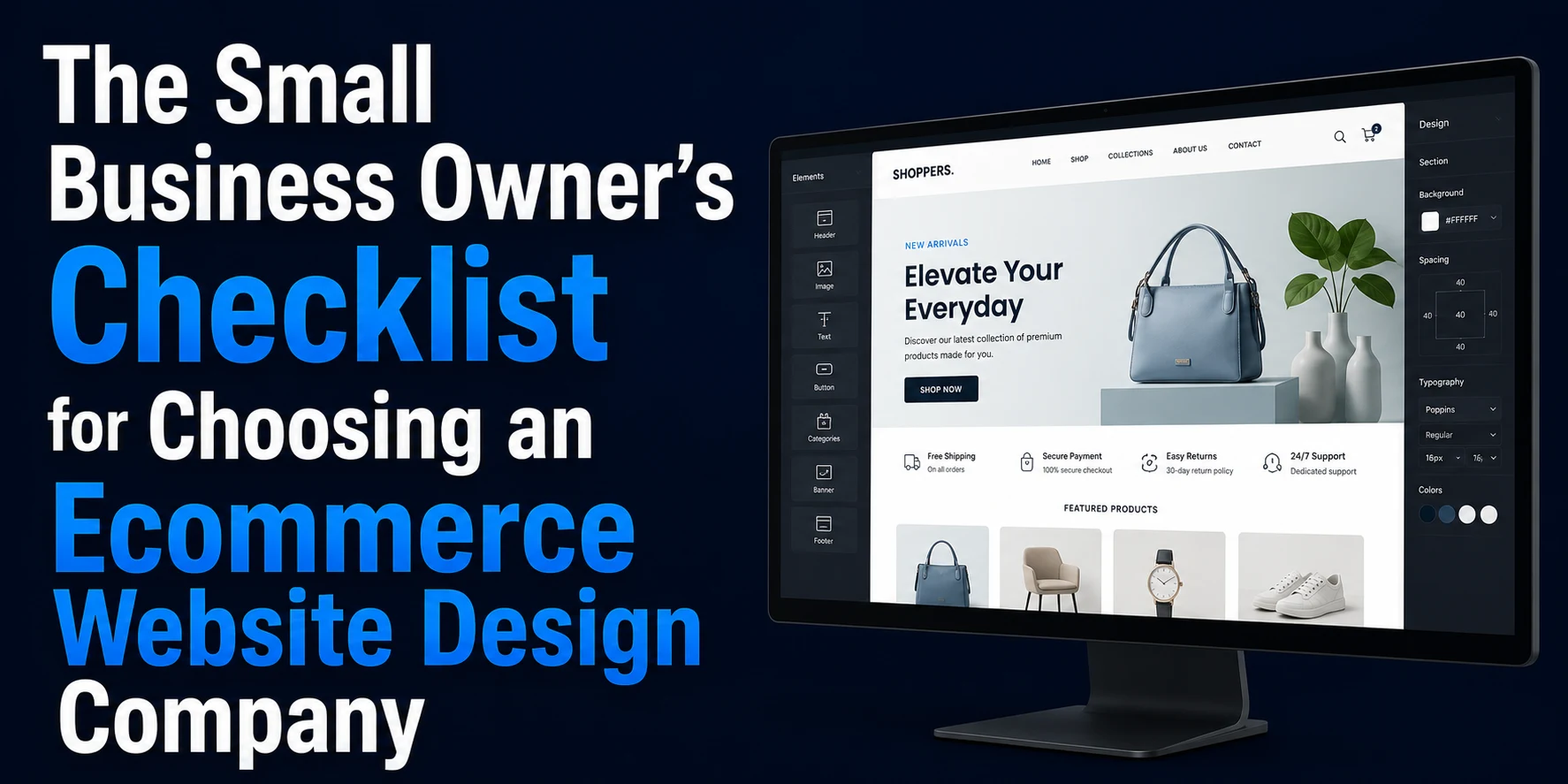

Your website is often the very first impression a customer gets of your business, and for many shoppers it is the only interaction they will have with your brand before deciding whether to buy. For a small business owner getting ready to sell online, choosing the right web design partner can quietly decide whether your store turns visitors into repeat customers or loses sales without you ever knowing why. With so many agencies and freelancers promising the same results, it helps to walk into those conversations with a clear checklist. Here is what actually matters when you are comparing ecommerce website design companies.
1. Start With Your Goals, Not Their Feature List
Before you look at a single portfolio, get clear on what your business actually needs. Are you launching your first online store, replacing one that has become outdated, or scaling a store that has outgrown its current platform? A design company worth hiring will start the conversation by asking about your products, your customers, and your growth plans rather than jumping straight into a sales pitch. That approach is a strong sign they build around your business instead of fitting you into a generic template.
2. Review Real Ecommerce Portfolios, Not Just Pretty Websites
Plenty of agencies can design an attractive homepage. Fewer can build a store that handles product variations, shipping rules, tax calculations, and a smooth checkout without friction. Ask to see live ecommerce sites they have built, not just mockups or screenshots. Add a product to the cart yourself and walk through checkout. Pay attention to how fast the pages load and whether the design still feels clean and easy to use on a phone.
3. Confirm Mobile Friendly Design Is the Default, Not an Extra
More shoppers now browse and buy from their phones than from a desktop computer. A design company worth your budget treats mobile responsiveness as a baseline requirement, not an add on feature you have to request separately or pay more for later. Ask how they test sites across different screen sizes and devices before a store goes live, and ask to see the mobile version of a few sites in their portfolio.
4. Ask About Search Visibility and Site Speed Early
A beautiful store that nobody can find will not pay the bills. Ask potential partners how they approach on page search optimization, image compression, and loading speed as part of the actual build, not as a separate service tacked on afterward. Slow pages and weak search visibility quietly drain traffic and sales over time, so this should be part of the core conversation from the start.
5. Look Closely at Payment Integration and Checkout Security
This is one area where cutting corners can become expensive. Check which payment gateways are supported, how customer payment data is protected, and whether the checkout process is smooth on both desktop and mobile. A slow or confusing checkout is one of the biggest reasons shoppers abandon their carts before completing a purchase.
A well-built e-commerce website should combine strong security with a seamless buying experience. Odyssey Design Company, a San Antonio ecommerce web design company develops online stores with secure payment gateway integrations, including PayPal and Stripe, while ensuring the checkout process is simple, fast, and reliable. The websites also include practical features for managing inventory, processing orders, and tracking sales from a single dashboard.
A company that prioritises secure payments and an intuitive checkout experience is far more likely to deliver an e-commerce website that supports customer trust, improves conversions, and performs well over the long term.
6. Check for Built In Inventory and Order Management Tools
Running a store is about far more than the storefront itself. You need a simple way to track stock levels, process orders efficiently, and understand which products are actually driving sales. Ask how their platform choice supports this day to day work, and whether you will be working from a simple dashboard or something that requires a developer every time you need to make a change.
7. Understand the Platform They Build On, and Who Owns It
Some companies build on established platforms, others build fully custom sites from the ground up. Neither approach is automatically the better choice, but you should know exactly what you are getting. Ask how much it costs to make changes later, whether you have full access to your own site and data, or whether you would be locked into that one company for every future update.
8. Ask What Happens After Launch
A website is rarely ever truly finished. Ask how the company handles bug fixes, security patches, and small content updates once your store is live. Find out whether ongoing support is included, billed by the hour, or offered as a monthly plan, and get the answer in writing before you sign anything.
9. Get a Real Timeline and Transparent Pricing
Vague timelines and pricing are one of the most common sources of frustration for small business owners. A trustworthy partner will give you a realistic project schedule, explain what might cause delays, and break down costs in plain terms, including what counts as an additional charge. If a quote seems unusually low compared to similar companies, ask directly what might be missing from it.
10. Talk to Past Clients, Not Just Testimonials
Reviews posted on a company’s own website are easy to curate. Ask for two or three references you can actually reach out to, and ask them how problems were handled, not just how the finished site turned out. The way a company responds when something goes wrong tells you far more about them than any five star review.
A Few Red Flags Worth Watching For
- Pressure to sign quickly without a detailed written proposal
- No clear answer about who owns your website files and domain
- Reluctance to show live ecommerce examples you can actually test
- Pricing that seems unusually low compared to similar agencies
- No real plan for support once the store goes live
Also Read: BrandRank.AI Normalization Transformation Rules: The Complete 2026 Guide to Winning AI Visibility
Final Thoughts
Choosing an ecommerce website design company is less about finding the flashiest portfolio and more about finding a partner who understands how online retail actually works, from checkout to fulfillment to long term growth. Take your time, ask direct questions, and use this checklist as a starting point rather than a final word. The right partner will welcome the scrutiny, because they know that a well built, secure, and easy to manage store benefits everyone involved for years to come.