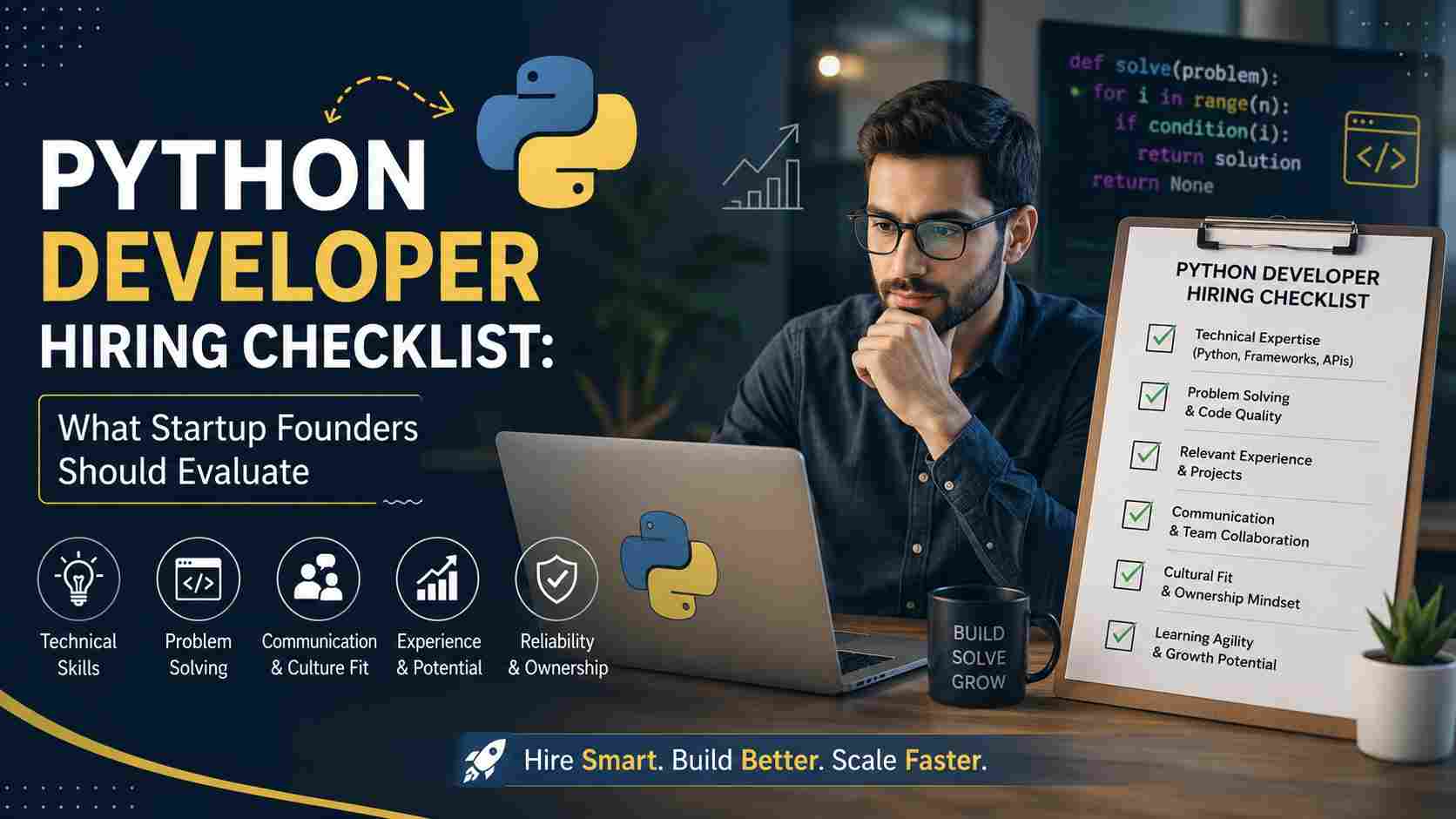

Before you hire a Python developer, there are five things worth checking off: the specific skill profile the role actually needs, a vetting process that tests production judgment rather than algorithm trivia, a contract that protects your IP from day one, a clear plan for what happens if the hire doesn’t work out, and a realistic sense of how fast you can move before your best candidates take another offer. Founders who hire Python developers without working through this list tend to discover the gaps only after the person has already started, which is the most expensive time to find them.
1. Define Which Python Profile You Actually Need
The single biggest mistake founders make when they set out to hire Python developers is treating the role as one job. In practice, “Python developer” covers at least three distinct profiles, and they barely overlap past basic syntax.
- AI and ML-focused roles need real, recent hands-on work with PyTorch, TensorFlow, scikit-learn, Hugging Face Transformers, and increasingly LangChain for teams building generative AI features.
- Automation and data pipeline roles need SQL and NoSQL fluency, comfort with tools like PySpark, and what data engineers call production instinct: reasoning about memory limits, writing idempotent code, and handling messy or late-arriving data without breaking things downstream.
- Backend and product-facing roles need strong REST API design, async programming, containerization with Docker, a working cloud platform, and baseline testing and CI/CD discipline.
Write the job description around one of these, not all three. A vague posting attracts candidates who are a poor match for the actual work and wastes weeks of screening.
2. Build a Skills Checklist Specific to That Profile
Once you know which profile you’re hiring for, the technical checklist should follow directly from it rather than a generic Python skills list pulled off the internet. For an AI-focused hire, check for a portfolio with projects from the last six months, since the tooling in this space moves fast enough that two-year-old experience tells you very little. For an automation or data role, check for evidence of pipelines that actually run in production, not just notebooks. For a backend role, check which specific framework they’ve shipped with, since Django, FastAPI, and Flask require genuinely different mindsets and experience with one doesn’t automatically transfer to another.
3. Test for Judgment, Not Just Syntax
A large share of Python hiring mistakes trace back to interviews built entirely around algorithm puzzles that test whether someone can write correct code on data that fits neatly in memory. That’s a weak proxy for the actual job in most cases. A stronger checklist for this stage includes:
- A portfolio review focused on what the candidate built independently.
- A screening call to check whether they can explain technical tradeoffs in plain language, which matters even more for remote hires.
- A paid work-sample project scoped to a real version of your actual problem, not a generic take-home template.
- A live technical conversation about architecture and past decisions, rather than syntax trivia.
- A reference check focused on what the person actually shipped on their own.
This matters more than it might seem. Recent industry data shows that 38.5% of tech candidates are now using AI tools to get through interviews, sometimes well enough that experienced interviewers don’t catch it. A checklist that leans on a single technical interview alone is easier to game than one that combines a work sample with independent review.
4. Put IP Ownership and Replacement Terms in Writing
This is the item most likely to get skipped under deadline pressure, and it’s expensive to fix later. By default, the person who writes code owns it unless a signed agreement says otherwise, which means paying a developer doesn’t automatically transfer ownership of what they build. Before any code gets written, confirm the contract includes a clear work-for-hire and IP assignment clause. At the same time, check what happens if the hire doesn’t work out. A vague answer about replacement terms or exit clauses is a sign to slow down, not sign the contract.
5. Know How Fast You Actually Need to Move
Speed matters more in Python hiring than most founders expect, particularly for AI and automation roles where demand is highest. Time-to-hire for specialized technical roles has stretched well past two months in many markets, and a slow process doesn’t just delay your roadmap, it filters for whichever candidates are willing to wait the longest rather than the strongest ones. Build a realistic timeline into your checklist before you start, so you can tell early whether your process is moving fast enough to compete for the person you actually want.
Also Read: Best Laptop for Home Use in the USA (2026)
Where This Checklist Gets Hard to Run Alone
Working through all five of these steps, defining the right profile, building a profile-specific skills list, running a judgment-based vetting process, locking down the contract, and moving fast enough to compete, is a lot to manage without dedicated hiring support. This is the exact gap platforms like Uplers are built to close for founders who need to hire Python developers without building this process from scratch. Uplers runs candidates through a two-stage vetting process that combines AI screening with human technical validation across specific skill sets, including Python, PyTorch, TensorFlow, and LangChain, and matches candidates to the profile you actually need. Shortlists of three to five relevant candidates typically arrive within 48 hours, contracts come with IP assignment built in, and a 90-day replacement guarantee on full-time hires covers the risk if a match doesn’t work out.
Whether you run this checklist yourself or lean on a hiring partner to run it for you, the principle stays the same: founders who hire Python developers by working through a defined checklist end up with far fewer surprises than founders who hire on instinct and hope the resume told the whole story.